Evidence Base
The living primary record: archaeology, epigraphy, textual criticism, and comparative mythology filtered by confidence labels.
Status: primary record · confidence-filtered
A living research atlas for ancient Near Eastern religion, biblical textual history, goddess trajectories, culture-bringer traditions, and related chronological and architectural controls — focused on what the evidence can bear, with contested leaps labeled rather than settled.
Research refresh · 15 September 2026
This refresh adds direct links to institutional object records and excavation resources. They strengthen the archive’s controls without turning a source record into a larger claim than it can carry.
| Control | What the record adds | Archive tier |
|---|---|---|
| Elephantine P. Berlin P. 13495 | An Aramaic documentary letter records the destruction of a Temple of YHW at Elephantine and a petition to rebuild it. | Strong text · pairing interpretation Contested |
| Tel Arad fortress temple | The official park record describes a ninth–eighth-century BCE Judean shrine, incense altars, a standing stone, and an ostraca archive. | Strong site · “House of YHWH” referent Contested |
| Ketef Hinnom burial caves | Israel Museum and IAA records place the burial complex in the late First Temple horizon and preserve the context for the silver-amulet dossier. | Strong context · wording reconstructed from published readings |
| Dead Sea Scrolls Digital Library | The IAA’s catalogue distinguishes text, manuscript, and composition, and documents multiple copies and textual forms rather than one frozen stream. | Strong plurality · “original” readings remain case-specific |
Start here
You do not need to read the whole core first. Follow this path for orientation.
Document map
The living primary record: archaeology, epigraphy, textual criticism, and comparative mythology filtered by confidence labels.
Status: primary record · confidence-filtered
Confidence-marked sequence of the same material by period — Neolithic through Second Temple and later audit points. Evidence-only sequence.
Status: supporting reference · same evidence bar
Side-by-side patterns and a divine-names catalogue — synthesis tools that stay inside the evidence bar of Documents 1–3 (all evidence surfaces).
Status: descriptive controls · confidence-tagged
Confidence key
Labels mark what the sources can support — not spiritual value or personal preference.
Multiple independent controls (text, epigraphy, or archaeology). Broad scholarly acceptance or a very strong minority position.
Real evidence exists, but interpretation, dating, or identity equations remain debated among specialists.
Supported by some primary data but currently thin, indirect, or single-stream.
Method rules
Forensic reading workflow
The archive uses a repeatable chain so a compelling story cannot outrun its controls.
Explore the atlas
Jump into any major section of the primary record:
Seven conclusions with evidence and hard stops — open Patterns for the full “why”:
Comparative figures with attestation confidence:
| This archive is | This archive is not |
|---|---|
| An evidence-filtered research workbook with explicit confidence tags | A finished academic monograph or peer-reviewed publication |
| A place to hold primary anchors (inscriptions, manuscripts, sites) beside careful comparison | A single conspiracy narrative or identity-collapse of all deities into one being |
| Structured so interpretive leaps stay labeled Contested/Limited and never overwrite the evidence core | A substitute for reading the primary editions and standard scholarly literature |
Living primary record — maintained and updated in this page. Cross-references from Timeline, Patterns, and Divine Names jump here to the matching section.
Classical “sigla” usually refers to the formal critical signs standardized in Hellenistic Alexandria (Aristarchus of Samothrace, 3rd–2nd c. BCE) and later used in biblical criticism: obelus, asterisk, diple, and related marks, plus modern manuscript abbreviations (𝔓, ℵ, B, etc.).
That formal system is not the beginning of the trail.
Long before Aristarchus, Near Eastern scribes already used meta-linguistic marks to correct, gloss, translate, and flag text. Those earlier practices are what allow textual and editorial history to be traced further back than the classical Greek apparatus alone would permit.
Genealogy of editorial marking (Strong where existence is attested)
| Period | Practice | What it does | Primary Evidence | Confidence |
|---|---|---|---|---|
| Late Bronze Age (14th c. BCE) | *Glossenkeile* (gloss wedges) in Amarna / related cuneiform | Pronunciation guides, Canaanite glosses on Akkadian, metapragmatic notes for specialist readers | Amarna letters; related cuneiform correspondence | Strong |
| 2nd millennium BCE | Editorial wedges and rare dual-dot letter-corrections in Ugaritic contexts | Bilingual / correction marking in a West Semitic literary culture | Ugaritic tablets | Strong |
| Persian period (5th–4th c. BCE) | Vertical double dots for interlinear additions and clause punctuation | Marks insertions without full erasure; leaves a visible intervention trail | Elephantine Aramaic papyri (Jewish colony at Yeb) | Strong |
| Hellenistic Alexandria (3rd–2nd c. BCE) | Aristarchian critical signs (obelus ÷, asterisk ※, diple >, etc.) | Systematic flagging of suspect, interpolated, or noteworthy Homeric (later biblical) lines | Aristarchus’s editions; later reception in biblical criticism | Strong |
| Qumran / Second Temple | *Puncta extraordinaria*, paleo-Hebrew divine names, marginal marks | Scribal caution, special treatment of divine names, local correction practice | Dead Sea Scrolls corpus | Strong |
| 3rd c. CE onward | Origen’s Hexapla (Aristarchian signs applied to biblical columns) | Comparative Old Testament text with explicit critical marking | Patristic testimony; Hexaplaric traces in later MSS | Strong |
| Medieval Masoretic | *Masora parva/magna*, *qere/ketiv*, extraordinary points | Extremely dense control apparatus for the received Hebrew text | Aleppo Codex, Leningrad Codex, related codices | Strong |
| Modern critical editions | Standardized manuscript sigla and brackets for disputed text | Transparent apparatus for variants and secondary readings | Nestle-Aland; BHS / BHQ | Strong |
Why the pre-Aristarchian layer matters
1. Chronological reach — Gloss wedges and related cuneiform practices sit in the Late Bronze Age, centuries before the Hebrew Bible’s final forms and more than a millennium before Alexandrian Homeric criticism. They establish that trained scribal communities already had toolkits for guiding, correcting, and annotating text.
2. Continuity of craft — Elephantine double-dot practice shows Northwest Semitic scribes in the Persian period still using visible, standardized intervention marks — the same broad family of behaviour later formalized as classical sigla.
3. Methodological implication — Tracing “how a text was curated” does not start with Aristarchus. Starting only with Greek sigla would artificially truncate the forensic window. The deeper Near Eastern marking systems are what push the evidence trail further back.
What this does not automatically prove
Existence of early editorial marks is Strong.
Any single grand narrative that reads every mark across five millennia as one continuous program of theological “suppression” is Contested / interpretive and is not treated as a settled result of Document 1.
What Document 1 records is the physical and documentary fact of successive marking systems and the specific variants and interpolations those systems help recover.
The following passages are absent from the earliest and best Greek manuscripts and are therefore judged secondary by the overwhelming majority of textual critics.
| Passage | Content | Absent From | Approximate Date of Addition | Confidence that it is secondary |
|---|---|---|---|---|
| Mark 16:9–20 | Longer Ending (resurrection appearances, snake-handling, etc.) | ℵ (Sinaiticus), B (Vaticanus), and other early witnesses | 2nd century CE | Strong |
| John 7:53–8:11 | Pericope Adulterae (“woman caught in adultery”) | 𝔓⁶⁶, 𝔓⁷⁵, ℵ, B, and most early Greek tradition | 2nd–3rd century CE or later | Strong |
| 1 John 5:7–8 | Comma Johanneum (explicit Trinitarian formula) | All Greek manuscripts before the 14th century; absent from early versions | Appears in Latin tradition; entered Greek tradition very late | Strong |
| Luke 22:43–44 | Jesus sweating blood / angel strengthening him | 𝔓⁷⁵, B, and other early witnesses | 2nd–3rd century CE | Strong |
| John 5:4 | Angel troubling the water at Bethesda | 𝔓⁶⁶, 𝔓⁷⁵, ℵ, B | 2nd–3rd century CE | Strong |
| Matthew 6:13b | Doxology of the Lord’s Prayer (“For thine is the kingdom…”) | ℵ, B, and early witnesses | Liturgical addition | Strong |
Primary reference editions
These omissions are not theological opinions; they are manuscript facts.
The King James Version (1611) rests on the Textus Receptus, a Greek text compiled by Erasmus (1516 and later editions) from a small number of late medieval Byzantine manuscripts (mostly 12th–15th century).
Notable issues (Strong evidence):
Deuteronomy 32:8–9 (Strong evidence of variation)
Divine Council language elsewhere
Psalm 82 and other passages preserve older language of a divine assembly that later interpretive traditions sought to neutralize or reinterpret. This is a well-documented phenomenon in the history of Israelite religion (see Mark S. Smith, The Origins of Biblical Monotheism; 🪽 Michael S. Heiser’s work on the divine council, though some of his broader conclusions remain contested).
This exclusion is a historical fact of canon formation, not evidence of a conspiracy in the modern sense. It does, however, demonstrate that significant early Jewish literature dealing with heavenly beings and forbidden knowledge was deliberately set aside.
1 Enoch presents a denser, more named angelology than most of the Hebrew Bible. Drawn from the Book of the 👁 Watchers (1 Enoch 1–36) and related sections (Geʿez + Qumran). Confidence labels mark textual presence, not modern doctrinal endorsement.
A. Two poles — Holy watchers oversee cosmos and judgment; rebel 👁 Watchers descend, teach forbidden arts, and are bound. Same “watcher” root covers both; context decides.
| Named holy angels (1 Enoch 20, summary) | Function in the text |
|---|---|
| 🪽 Uriel | World / Tartarus; guide for Enoch |
| 🪽 Raphael | Spirits of humans; binds 👁 Asael/👁 Azazel |
| 🪽 Raguel | Vengeance on luminaries’ world |
| 🪽 Michael | Humanity / chaos; chief intercessor-warrior |
| 🪽 Saraqael | Spirits who sin in the spirit |
| 🪽 Gabriel | Paradise, serpents, cherubim |
| 🪽 Remiel (variants) | Those who rise |
Rebel leaders — 👁 Shemihazah (descent, oath on Hermon, enchantments); 👁 Asael/👁 Azazel (metallurgy, weapons, cosmetics). Other chiefs teach constellations, astrology, sun/moon courses.
Culture-bringer / corruption motif — Weapons, cosmetics, spells, sky-lore: civilizing gifts that also corrupt. Parallel (not identity) with 🐟 Apkallu motif in §5.
Document 1 does not claim identity with Ugaritic sons of 🌊 Asherah">🌊 Athirat or Anunnaki; later grimoire continuity; or that Western canons “should” include Enoch. Ethiopia’s canonicity is a reception fact (§2.3).
Textual anchors: 1 Enoch 6–16, 20, 40; Qumran Enoch fragments; Geʿez corpus. · Full offline cards: Angels panel.
The Hebrew Bible and New Testament are not single, static books. They are the end products of long processes of composition, compilation, translation, and editorial revision. Mapping the major textual “branches” is essential for understanding where and when changes occurred.
Main surviving witnesses (Strong evidence)
| Tradition | Approximate Date Range | Key Characteristics | Confidence |
|---|---|---|---|
| Dead Sea Scrolls (DSS) | c. 250 BCE – 70 CE | Earliest extensive Hebrew manuscripts; multiple textual forms (proto-Masoretic, pre-Samaritan, non-aligned, etc.) | Strong |
| Septuagint (LXX) | Translation began c. 3rd century BCE | Greek translation of the Hebrew scriptures; often preserves older readings than the later Masoretic Text | Strong |
| Samaritan Pentateuch | Final form by late Second Temple period | Distinct textual tradition of the Torah with theological expansions favoring Mount Gerizim | Strong |
| Masoretic Text (MT) | Standardized c. 6th–10th centuries CE (with earlier roots) | The received Hebrew text of Judaism; meticulously pointed and annotated by the Masoretes | Strong |
Key observations
Documentary Hypothesis and compositional layers (Contested)
The classical Documentary Hypothesis (J, E, D, P sources) remains influential, though many contemporary scholars prefer more fluid models of gradual compositional growth. The existence of multiple compositional stages and later editorial activity is widely accepted; the precise identification and dating of discrete sources remains debated.
Major text-types / manuscript families (Strong evidence)
| Text-Type / Family | Key Representatives | Approximate Date of Earliest Witnesses | Characteristics |
|---|---|---|---|
| Alexandrian | 𝔓⁶⁶, 𝔓⁷⁵, ℵ (Sinaiticus), B (Vaticanus) | 2nd–4th centuries CE | Generally shorter, considered by most critics closer to the original |
| Western | D (Codex Bezae), Old Latin versions | 3rd–5th centuries CE | Often longer, paraphrastic, sometimes theologically expansive |
| Byzantine (Majority Text) | Majority of later minuscules | Dominant from 9th century onward | Smoother, fuller readings; the basis of the Textus Receptus |
| Caesarean | (Less clearly defined) | — | Intermediate features |
Critical editions
Modern scholarly editions (Nestle-Aland 28, UBS 5) are eclectic texts that weigh external and internal evidence rather than following any single manuscript or text-type. They give priority to the earliest and most geographically diverse witnesses, especially the early papyri and the great Alexandrian uncials.
1. Pre-70 CE diversity → Post-70 CE gradual standardization of the Hebrew text toward what became the Masoretic tradition.
2. Septuagint vs. emerging proto-Masoretic text — parallel streams that sometimes preserve different earlier readings.
3. New Testament papyri (2nd–3rd c.) → Great uncials (4th c.) → later Byzantine dominance.
4. Exclusion of 1 Enoch and other Second Temple literature from the developing Jewish and Christian canons (historical fact of canon formation).
5. Textus Receptus (16th c.) → King James Version, versus modern critical texts based on earlier manuscripts.
Primary reference works
This section traces the historically recoverable presence and progressive marginalization of a feminine divine figure associated with the high god in the ancient Near East and early Israelite religion, followed by residual forms in later Jewish and early Christian literature.
In the Late Bronze Age texts from Ugarit (Ras Shamra, 14th–13th centuries BCE), 🌊 Asherah">🌊 Athirat (🌊 Asherah">🌊 ’aṯrt / 🌊 Asherah">🌊 Athirat) appears as the consort of the high god ⭐ El and mother of the gods. She is a major deity in the Canaanite pantheon. Primary sources: the ⚡ Baal Cycle and related mythological / ritual tablets (standard reference series: KTU / CAT).
Principal epithets (Strong — multiple tablet attestations)
| Ugaritic | Sense | Notes |
|---|---|---|
| *rbt 🌊 Asherah">🌊 ʾaṯrt ym* | Lady 🌊 Asherah">🌊 Athirat of the Sea | Most common title |
| *qnyt ʾilm* | Progenitress / creatress of the gods | Mother-of-gods role |
| *ʾilt* | The goddess (feminine of *ʾil*) | Parallel to ⭐ El |
| *qdš* | Holy one | Shared divine epithet field |
| *ʾum* | Mother | Matriarchal language |
Roles attested in the myths: consort of ⭐ El; mother / progenitress of the divine assembly; sea association; intercessor / queen-mother figure in palace and banquet scenes.
KTU 1.4 VI 46 (⚡ Baal Cycle) — ⚡ Baal, after the building of his palace, invites guests to a banquet. The text refers to the sons of 🌊 Asherah">🌊 Athirat in a form widely read as “seventy sons of 🌊 Asherah">🌊 Athirat” (šbʿm bn 🌊 Asherah">🌊 ʾaṯrt / related phrasing in the column).
Confidence:
Named / specified offspring and associates (Strong for the named figures in their tablets)
| Figure | Role | Primary text | Confidence |
|---|---|---|---|
| **🌊 Shahar** (Dawn) | Dawn / morning; paired with 🌊 Shalim | KTU 1.23 (*Birth of the Gracious Gods*) | Strong |
| **🌊 Shalim** (Dusk / completion) | Dusk / evening; root Š-L-M | KTU 1.23 | Strong |
| **Gracious / beautiful gods** (*ʾilm nʿmm*) | Voracious divine pair / group nursed at the breast of the Lady (🌊 Asherah">🌊 Athirat / Rahmay) | KTU 1.23 | Strong (text) |
| **Qudšu-wa-Amrur** | Fisherman / messenger of 🌊 Asherah">🌊 Athirat (*dgy 🌊 Asherah">🌊 ʾaṯrt*); accompanies her; prepares her mount | ⚡ Baal Cycle; ritual texts (e.g. RS 24.271) | Strong |
| **Gupan and Ugar** | Messengers of ⚡ Baal (network that intersects 🌊 Asherah">🌊 Athirat’s circle in the palace narrative) | ⚡ Baal Cycle | Strong |
KTU 1.23 (Birth of the Gracious Gods) — ⭐ El encounters two women; 🌊 Shahar and 🌊 Shalim are born; nursing language involves 🌊 Asherah">🌊 Athirat / Rahmay; the gods are described with extreme appetite. This is primary mythic evidence for 🌊 Asherah">🌊 Athirat’s maternal role toward specific named divine children.
| Passage | What is solid | What is interpretive |
|---|---|---|
| **Deut 32:8–9** | DSS / LXX support a reading with divine beings (“sons of God” / “angels of God”) vs MT “sons of Israel” | Identifying that group *as* 🌊 Asherah">🌊 Athirat’s seventy sons specifically is **Contested** |
| **Genesis 10** | Traditional counting of seventy nations in the Table of Nations | Parallelism with seventy sons of 🌊 Asherah">🌊 Athirat is a scholarly comparison, not a Ugaritic citation |
| **Psalm 82** | ⭐ El / Elohim">⭐ Elohim in the council of ⭐ El; judgment among gods | Structural parallel to a divine assembly; not a named 🌊 Asherah">🌊 Athirat list |
| **Isaiah 14:12** | *Hēlēl ben Šāḥar* — “Shining one, son of Dawn” | Linguistic echo of 🌊 Shahar; literary use in a taunt song, not a Ugaritic quote |
Jerusalem / 🌊 Shalim etymology — proposals linking the toponym to the god 🌊 Shalim exist in the literature; they remain Contested.
Ugaritic 🌊 Asherah">🌊 Athirat is the primary comparative background for Israelite 🌊 Asherah (name, consort-of-high-god pattern, mother-of-gods language). Document 1 records the tablet evidence and the standard seventy-sons reading; minority “seven” readings and biblical numerical typology stay labeled. Normative claims about 🌊 Asherah">🌊 Athirat’s “ultimate” status are outside this evidence archive.
Key scholarly anchors (secondary): Mark S. Smith & Wayne T. Pitard, The Ugaritic ⚡ Baal Cycle (Vol. II); Mark S. Smith on KTU 1.23; N. Wyatt on the seventy sons / Deut 32 discussion; standard KTU/CAT editions.
Ugarit (Strong). 🗡️ Anat is a major goddess in the ⚡ Baal Cycle and the Epic of Aqhat. She is not ⭐ El’s consort (that role belongs to 🌊 Asherah">🌊 Athirat). Her profile is martial and autonomous:
| Feature | Attestation |
|---|---|
| Epithet *btlt ʿnt* (“maiden 🗡️ Anat”) | Recurrent in Ugaritic |
| Ally / sister of ⚡ Baal | ⚡ Baal Cycle — presses ⭐ El for ⚡ Baal’s palace; fights; mourns and avenges ⚡ Baal against Mot |
| Violence / battle | Graphic combat scenes; blood imagery |
| Aqhat narrative | Conflict over the bow of Aqhat |
| Distinct from 🌊 Asherah">🌊 Athirat | Different partner-axis (⚡ Baal vs ⭐ El); different feature-bundle (war vs mother/sea) |
Levant / Egypt. 🗡️ Anat was known beyond Ugarit, including Egyptian receptions of West Semitic deities.
Hebrew Bible (Strong for onomastics only). The name survives in place and personal names (e.g. 🗡️ Anat (onomastic)">🗡️ Beth-Anath, 🗡️ Anat (onomastic)">🗡️ Anathoth, Shamgar son of Anath). There is no continuous 🗡️ Anat myth cycle inside the biblical narrative comparable to Ugarit.
Elephantine — 🗡️ Anat (warrior)">🗡️ 🗡️ Anat-🔥 Yahu (Strong attestation; Contested relationship).
5th-century BCE Aramaic papyri from the Jewish military colony at Yeb (Elephantine, Egypt) name 🗡️ Anat (warrior)">🗡️ 🗡️ Anat-🔥 Yahu (and related forms such as 🗡️ Anat (warrior)">🗡️ 🗡️ Anat-Bethel) alongside 🔥 YHW. This is primary evidence that some Yahwistic communities still used a divine name pairing involving 🗡️ Anat centuries after the monarchic period. Whether 🗡️ Anat functions as consort, hypostasis, or local syncretic partner remains Contested.
Project relevance. 🗡️ Anat must be kept distinct from 🌊 Asherah">🌊 Athirat/🌊 Asherah in the feature atlas. Collapsing them confuses Kuntillet Ajrud (“his 🌊 Asherah”) with Elephantine (🗡️ Anat (warrior)">🗡️ 🗡️ Anat-🔥 Yahu).
1. Ugaritic ⚡ Baal (Strong).
⚡ Baal (bʿl, “lord”) / ⚡ Hadad is the storm-and-fertility god of the ⚡ Baal Cycle (KTU 1.1–1.6): conflict with Yam (Sea) and Mot (Death), palace-building, “cloud-rider” imagery, rain and kingship. He is 🗡️ Anat’s ally and operates in a pantheon headed by ⭐ El (with 🌊 Asherah">🌊 Athirat as ⭐ El’s consort). This is the primary historical portrait.
2. “⚡ Baal” as title and as rival in Israel (Strong).
In the Levant, baʿal could mean “lord/owner” and attach to local cults. The Hebrew Bible repeatedly polemicizes against ⚡ Baal worship (e.g. Elijah and the prophets of ⚡ Baal, 1 Kings 18; Hosea; Deuteronomistic reforms). Early 🔥 Yahweh poetry sometimes uses storm-theophany language that specialists compare with ⚡ Baal’s feature-set (e.g. Psalm 29-type imagery) — usually framed as competition or attribute absorption, not identity.
3. ⚡ Baal-Zebub of Ekron (Strong as biblical notice).
2 Kings 1:2–16 refers to ⚡ Baal name-history / reception">⚡ ⚡ Baal-zebub, god of Philistine Ekron, consulted by Ahaziah. The form is often understood as “lord of the flies” (possibly pejorative) or related to a title baʿal zebul (“lord of the princely dwelling”) distorted in transmission. This is a local ⚡ Baal-type cult title, not a full retelling of the Ugaritic ⚡ Baal Cycle.
4. New Testament ⚡ Baal name-history / reception">⚡ Beelzebul / ⚡ Baal name-history / reception">⚡ Beelzebub (Strong as text).
In the Gospels (e.g. Mark 3:22; Matthew 12:24), opponents accuse Jesus of casting out demons by ⚡ Baal name-history / reception">⚡ Beelzebul, called “prince of demons.” The name continues the ⚡ Baal name-history / reception">⚡ ⚡ Baal-zebub / ⚡ Baal name-history / reception">⚡ ⚡ Baal-zebul line into Second Temple / early Christian usage as a hostile designation for a chief demonic power.
5. Later Christian demonology (Strong as reception history).
In medieval and early modern demonological catalogues, ⚡ Baal name-history / reception">⚡ Beelzebub is ranked among major demons (sometimes “prince of demons”). That is reception and reinterpretation of the biblical polemical name, not new archaeological data about Late Bronze Ugarit.
How to read the “⚡ Baal = demon” idea today
| Layer | What it is | Confidence |
|---|---|---|
| Ugaritic ⚡ Baal | High-status storm/fertility god in a polytheistic pantheon | **Strong** |
| Biblical anti-⚡ Baal polemic | Israelite religious conflict; ⚡ Baal as illicit rival | **Strong** |
| ⚡ Baal name-history / reception">⚡ ⚡ Baal-zebub (Ekron) | Named local deity in 2 Kings | **Strong** |
| NT ⚡ Baal name-history / reception">⚡ Beelzebul as “prince of demons” | Early Jewish/Christian hostile use of the name | **Strong** |
| Modern pop “⚡ Baal is a demon” | Collapses all layers into one; treats Ugaritic ⚡ Baal as if he were always the NT demon | **Category error** unless specified as *reception history* |
Casual modern speech often skips the distinction. For this archive: Ugaritic ⚡ Baal stays in the historical pantheon table; ⚡ Baal name-history / reception">⚡ Beelzebub/⚡ Baal name-history / reception">⚡ Beelzebul belongs under reception / demonological afterlife. They are linked by name-history, not by identical ontology across 3,000 years.
Pleiades (astronomy): open cluster in Taurus; traditional “seven stars” though six are commonly prominent to the naked eye.
Mesopotamian Sebettu / Sibittu (“the Seven”): a group of seven deities in Akkadian sources; in astral contexts often associated with the Pleiades. Pattern of a divine seven is Strong.
Hebrew Kīmāh (כִּימָה): Job 9:9; 38:31; Amos 5:8 — standard identification with the Pleiades (LXX Πλειάς). Strong as conventional identification.
Link to 🌊 Asherah">🌊 Athirat’s sons: the minority proposal that KTU 1.4 VI 46’s šbʿm means seven (not seventy) and points to an astral seven / Sebettu-type group is Contested. It does not overturn the majority seventy sons reading, but it explains why Pleiades/Sebettu appear in the comparative discussion.
Two key inscriptions from the 8th century BCE demonstrate that 🌊 Asherah was associated with 🔥 Yahweh in popular Israelite religion. These are primary epigraphic finds, not later literary constructions.
| Find | Region / date | What the text shows | Confidence |
|---|---|---|---|
| Kuntillet Ajrud | N. Sinai · early 8th c. BCE | “🔥 Yahweh of Samaria and his 🌊 Asherah” · “🔥 Yahweh of Teman and his 🌊 Asherah” blessing formulae | Strong (association) |
| Khirbet el-Qom | Judah · 8th c. BCE | Tomb blessing pairing 🔥 Yahweh with “his 🌊 Asherah” | Strong (association) |
Grammar of “his 🌊 Asherah” (keep tiers separate)
| Reading | Claim | Confidence |
|---|---|---|
| Name association | The name 🌊 Asherah is paired with 🔥 Yahweh in living Israelite/Judahite blessing formulae | Strong |
| Goddess | “His 🌊 Asherah” = the goddess as consort/partner | Contested |
| Cult object / symbol | “His 🌊 Asherah” = a cult pole, stylized tree, or shrine object belonging to 🔥 Yahweh | Contested |
The association is unambiguous as epigraphy. Ontology (goddess vs object) remains debated; the archive does not force one reading to Strong.
Additional material controls
Local links: Kuntillet source · el-Qom source · Pillar figurines · Asherah character
The same vessels that carry the ink blessings also preserve drawings. Specialists debate how (or whether) the pictures illustrate the text.
Method rule: do not let a contested drawing override the stronger ink text. Textual reading first; iconography as a separate, weaker tier.
Independent lines place the divine name 🔥 Yahweh (or a closely related form) and 🔥 Yahweh-of-place titles in a southern / desert-adjacent horizon long before and beside monarchic “official” Jerusalem theology.
| Control | What it shows | Confidence |
|---|---|---|
| Soleb (Amenhotep III, c. 1400 BCE) | Egyptian topographical list: “land of the Shasu of Yhw” — earliest widely accepted extra-biblical name form | Strong (name attestation) |
| Related Egyptian lists (e.g. Amarah-West tradition in secondary literature) | Further southern-name geography discussions | Strong where published; details vary by list |
| Kuntillet Ajrud | “🔥 Yahweh of Teman” alongside “🔥 Yahweh of Samaria” — geographic titles, not only a single national cult center | Strong |
| Southern theophany poetry (Deut 33:2; Judg 5:4–5; Hab 3:3) | 🔥 Yahweh comes from Seir / Edom / Teman / Paran / Sinai language in early poems | Strong as text; historical geography of origin Contested |
| Midianite–Kenite hypothesis | Proposal that 🔥 Yahweh worship entered Israel via southern (Midian/Kenite) contact (often tied to Moses-in-Midian narratives) | Contested (hypothesis) |
What this does not prove
Local links: Soleb source · Timeline Soleb · Yahweh character
The Deuteronomistic literature (Deuteronomy, Joshua–Kings) consistently portrays 🌊 Asherah worship and related practices as foreign and illegitimate.
Key actions recorded:
This is a deliberate theological program to center exclusive 🔥 Yahweh worship and to eliminate competing or complementary figures, including feminine ones. Strong as literary program; archaeological correlation of every narrative detail varies.
Jeremiah condemns a popular cult of the Queen of Heaven practiced in Judah and remembered among exiles in Egypt.
| Claim | Confidence |
|---|---|
| Biblical texts attest a Queen of Heaven cult with household participation and cake offerings | Strong |
| The cult was a live target of prophetic / reform polemic in the late monarchic–exilic horizon | Strong |
| Queen of Heaven = 🌊 Asherah | Contested |
| Queen of Heaven = Astarte / Ishtar / another goddess or hybrid | Contested |
Many scholars link the Queen of Heaven to 🌊 Asherah or related West Semitic / Mesopotamian goddess traditions. The archive records the link as Contested identity, not as a settled equation. Use with §3.2 epigraphy as multi-control context, not as a passport proof of one immortal goddess.
Local links: Queen of Heaven source · Timeline card · Josiah reforms
In later wisdom literature, especially Proverbs 1–9 and the Book of Sirach (Ecclesiasticus), Wisdom (✨ Sophia (trajectory Contested)">✨ Ḥokhmâh) is personified as a feminine figure who was present at creation, delights in humanity, and calls people to follow her.
Confidence: Strong for the existence and content of the texts; Contested regarding the precise degree of continuity with earlier 🌊 Asherah traditions.
These are well-attested literary developments. Whether they represent a direct historical survival of the earlier 🌊 Asherah cult or a more complex process of reinterpretation and mythic creativity remains a matter of scholarly discussion.
| Stage | Approximate Period | Character of the Evidence | Confidence |
|---|---|---|---|
| Ugaritic 🌊 Asherah">🌊 Athirat | 14th–13th c. BCE | Clear goddess, consort of ⭐ El | Strong |
| Israelite “🔥 Yahweh and his 🌊 Asherah” | 8th c. BCE | Epigraphic association in popular religion | Strong |
| Southern / geographic 🔥 Yahweh titles (Teman, Shasu of Yhw) | LBA–Iron Age | Name geography + epigraphic titles | Strong (name/titles) / Contested (origin hypothesis) |
| “Queen of Heaven” cult (Jer 7 & 44) | Late 7th–6th c. BCE horizon | Household cake cult in prophetic polemic | Strong (texts) / Contested (identity) |
| Deuteronomistic suppression | 7th–6th c. BCE and later editorial | Systematic literary and cultic opposition | Strong |
| ✨ Personified Wisdom (✨ Sophia (trajectory Contested)">✨ Chokhmah) | Persian / Hellenistic periods | Literary transformation | Strong (texts) / Contested (continuity) |
| ✨ Sophia in Hellenistic & Gnostic texts | 2nd c. BCE – 3rd c. CE | Highly developed mythological and philosophical figure | Strong (texts) / Contested (direct lineage) |
The archaeological and textual record shows a real historical process: a feminine divine figure associated with the high god in the cultural environment of early Israel, present in popular practice, and progressively marginalized in the official literature that became the Hebrew Bible. Later Jewish and Christian writings re-express related ideas in new literary and theological forms.
Primary reference works
Certain well-documented chronological issues affect the absolute dating of events in the biblical period and the early Christian era. These are not fringe claims; they are recognized problems in historical chronology.
Scholarly consensus places the birth most probably between approximately 6 and 4 BCE.
Various harmonization attempts exist (an earlier census, a different understanding of the Greek, etc.), but the discrepancy itself is a recognized historical problem.
Primary reference points
Across a range of ancient cultures, narratives appear of exceptional beings who arrive from outside ordinary human society, transmit knowledge or technology, and later depart, are confined, or are transformed. These motifs are well-documented in the primary mythological and literary traditions of each culture.
Important methodological note
The existence of structural parallels is a matter of comparative mythology (Strong).
Claims of a single historical source civilization, technological diffusion, or literal common ancestry lie outside the scope of this document and are not asserted here.
In Mesopotamian tradition (especially from the late 3rd and 2nd millennia BCE onward):
Primary sources include cuneiform texts from the Old Babylonian period onward and the later account of Berossus.
In the Book of the 👁 Watchers (1 Enoch 1–36) and related Second Temple texts:
This is a well-attested Jewish literary tradition of the Second Temple period.
In medieval Irish literature (primarily the Mythological Cycle):
The texts are medieval but draw on earlier oral traditions. The association with specific megalithic sites (especially the Brú na Bóinne complex) is a later literary and folkloric development.
These are core elements of the respective mythological systems recorded in post-conquest sources that preserve earlier indigenous traditions.
A comparative view of recurring motifs:
| Motif | Mesopotamian (🐟 Apkallu) | Enochic (👁 Watchers) | Celtic (Tuatha Dé Danann) | Mesoamerican (Quetzalcoatl / Viracocha) |
|---|---|---|---|---|
| Arrival from outside | From the sea / antediluvian | Descent from heaven | Arrival associated with clouds / sea | From the sea or elsewhere |
| Transmission of knowledge / arts | The *me*; crafts, cult, civilization | Metallurgy, cosmetics, celestial knowledge, etc. | Craftsmanship, healing, magical treasures | Agriculture, calendar, crafts, priestly knowledge |
| Association with specialized structures or places | Linked to early cities and cult | Teaching on Mount Hermon; later imprisonment | Associated with *sídhe* / megalithic mounds | Temples, ceremonial centers |
| Departure, confinement, or retreat | Post-Flood diminution or replacement | Bound and imprisoned until judgment | Retreat into the hollow hills / Otherworld | Departure across the sea |
Confidence summary
The value of these parallels for historical research lies in what they reveal about how different cultures narrated the origins of knowledge, social order, and the relationship between the human and the extra-human.
They do not, by themselves, demonstrate the historical existence of a single group of technological intermediaries or a shared pre-historic engineering tradition. Any such claim requires independent archaeological or textual evidence of a different order and is therefore excluded from this document.
Primary reference orientations
This section examines the archaeological evidence for precision in ancient monumental construction and related metrological questions. Only what is established by physical measurement, excavation, and peer-reviewed analysis is included.
The Giza pyramids (especially the Great Pyramid of Khufu) exhibit:
These facts are established by modern surveying and archaeological study.
The original purpose of the pyramids remains debated among specialists (primarily royal tombs within a larger mortuary and cultic complex is the dominant view). Claims of additional functions (atmospheric generation, magnetic stabilization, energy systems, etc.) lack supporting archaeological or physical evidence and are excluded here.
Pyramid-form monuments also appear in Nubia, Mesoamerica, and other regions. Whether these represent independent invention, cultural diffusion of the form, or other processes is a matter of ongoing archaeological discussion (Contested).
Newgrange (Brú na Bóinne, Ireland)
Other European megalithic sites show various degrees of astronomical orientation. The extent to which these reflect systematic, pan-regional knowledge remains debated.
Alexander Thom’s statistical analysis of hundreds of British and Breton megalithic sites led him to propose a standardized unit of length (the “Megalithic Yard,” approximately 2.72 feet / 0.829 m).
The hypothesis is therefore labeled Contested. It is included because it represents a serious, data-driven attempt to recover ancient metrology, not because it has achieved consensus.
Recovered from a shipwreck off the Greek island of Antikythera and dated to the 2nd century BCE (or slightly earlier), the Antikythera Mechanism is:
This is undisputed among historians of science and technology. It stands as hard physical evidence of sophisticated ancient engineering without requiring any additional interpretive framework.
Extraordinary precision in construction and astronomical alignment is well documented at a number of ancient sites.
These facts demonstrate high levels of observational skill, organizational capacity, and technical ability.
They do not, by themselves, establish the existence of lost high-energy technologies, planetary-scale engineering systems, or a single master template transmitted across cultures. Such claims require independent physical evidence of a different kind and are therefore excluded from this document.
Primary reference orientations
This final section gathers additional primary archaeological and epigraphic corpora that directly support or illuminate the material covered in earlier sections.
The Jewish military colony at Elephantine (Yeb) in Upper Egypt (5th century BCE) has left a substantial archive of Aramaic papyri.
Key established facts:
This corpus provides direct, contemporary evidence of a diaspora Yahwistic community whose practice and theology cannot be assumed to be identical to the emerging orthodoxy reflected in the later biblical literature. It is one of the most important external controls on the history of Israelite and early Jewish religion.
Primary sources: the Elephantine papyri (standard editions by Cowley, Porten & Yardeni, and subsequent publications).
Already noted in Section 3 for the “🔥 Yahweh and his 🌊 Asherah” inscriptions, these sites repay fuller attention:
Together with the broader distribution of female pillar figurines in Iron Age Judah, these finds demonstrate that the religious landscape of the monarchic period included elements that the later Deuteronomistic literature sought to suppress or eliminate. They are primary data, not later literary constructions.
The Late Bronze Age city of Ugarit (Ras Shamra) and its extensive cuneiform archives remain the single most important comparative corpus for understanding the Canaanite religious environment from which early Israelite religion emerged.
Beyond their value for textual criticism (Section 1 and 2), the Dead Sea Scrolls document a range of Jewish religious expression in the late Second Temple period:
They demonstrate that the process of canon formation and theological standardization was still ongoing in the centuries immediately before and after the turn of the era.
| Corpus | Period | Primary Contribution | Confidence |
|---|---|---|---|
| Elephantine papyri | 5th c. BCE | Diaspora Yahwism outside Jerusalem control; possible non-monotheistic elements | Strong |
| Kuntillet Ajrud & Khirbet el-Qom | 8th c. BCE | Epigraphic association of 🔥 Yahweh with 🌊 Asherah in popular religion | Strong |
| Ugaritic archives | 14th–13th c. BCE | Cultural and linguistic background for ⭐ El, 🌊 Asherah">🌊 Athirat, and divine-council language | Strong |
| Dead Sea Scrolls | c. 250 BCE – 70 CE | Textual diversity and non-canonical literature (including Enoch) | Strong |
These corpora do not require speculative interpretation to be historically significant. They supply independent, primary evidence that the religious and textual history of ancient Israel and early Judaism was more complex, more diverse, and more contested than the final form of the biblical literature alone would suggest.
Primary reference orientations
Document Status – Evidence Base
Core archive sections currently in this panel:
1–7 original core · 1.6 Enochic angelology · 8 Two Arks · 9 Ark of the Covenant · 10 Examinable artifacts · 11 Historical Yeshua
Cross-references elsewhere in the atlas jump to these local sections.
Every claim has been filtered for primary-source grounding and carries an explicit confidence label.
Interpretive frameworks, cosmological models, technological reconstructions, and personal syntheses are deliberately excluded from this evidence archive. Document 3 is an Evidence Companion (index/method only).
This document is now ready to serve as the durable historical foundation for further research.
Document maintained as living research. All future additions must meet the same evidentiary standard.
English collapses two different Hebrew nouns into one word, “ark.” The sources do not.
| Hebrew | Transliteration | Sense | Biblical referents | Conf. |
|---|---|---|---|---|
| תֵּבָה | tēvāh | Vessel / basket that preserves life through water | Noah’s vessel (Gen 6–9); Moses’ basket (Exod 2:3) | Strong |
| אָרוֹן | ʾārôn | Chest, box, cabinet, coffin | Ark of the Covenant; Joseph’s coffin (Gen 50:26); ordinary chests | Strong |
Implications
Mesopotamian flood craft (Atrahasis, Gilgamesh) are Strong as comparative literature; equating wrecks with Genesis is Contested.
| Question | Status | Conf. |
|---|---|---|
| Authenticated Ark in museum/dig? | No accepted specimen | Strong (absence) |
| Last clear biblical narrative location | First Temple context; disappears before/during Babylonian crisis | Strong as narrative fact |
| Axum / Ethiopian Tabot claim | Living tradition; not independently verified | Limited |
| Modern “discovery” claims | No peer-accepted artifacts | Limited |
| ANE cult chests as type | Portable divine chests known comparatively | Strong as type, not the Israelite object |
Traceable as a described cult object and ANE type; not currently examinable as a lab-provenanced artifact.
Rule: entry only if a physical object or published corpus exists that specialists can photograph, read, date, and argue over. Described-but-missing objects stay textual.
| Artifact | Date | What it shows | Conf. |
|---|---|---|---|
| Soleb name-rings | c. 1400 BCE | “🔥 Yahweh">🔥 Shasu of 🔥 Yhw” — earliest widely accepted extra-biblical 🔥 Yahweh name | Strong |
| Merneptah Stele | c. 1208 BCE | “Israel” as a people in Canaan | Strong |
| Kuntillet Ajrud | early 8th c. BCE | “🔥 Yahweh … and his 🌊 Asherah” | Strong (text) |
| Khirbet el-Qom | 8th c. BCE | 🔥 Yahweh + “his 🌊 Asherah” blessing | Strong (association) |
| Ketef Hinnom amulets | late 7th–6th c. BCE | Priestly blessing; divine name 🔥 YHWH | Strong |
| Tel Arad | Iron Age / early 6th c. | Judahite shrine; “House of 🔥 YHWH” ostracon | Strong (site) |
| Elephantine papyri | 5th c. BCE | Temple to 🔥 YHW; 🗡️ Anat (warrior)">🗡️ 🗡️ Anat-🔥 Yahu forms | Strong |
Ugaritic tablets · Dead Sea Scrolls · early Hebrew fragments · NT papyri & uncials — all Strong as physical corpora.
LMLK handles · Hezekiah bulla · Isaiah bulla (reading Contested) · City of David destruction debris (586 BCE) — objects Strong.
Newgrange · Antikythera · Giza orientation data — measurements Strong; interpretive leaps vary. See also §6.
Ark of the Covenant · Tablets of the Law as objects · Noah’s tēvāh · Axum “Ark” claim (unverified tradition).
Early archive builds prioritized ANE names, epigraphy, pre-Masoretic textual criticism, and Second Temple diversity. A full historical-Jesus file was scope order, not a judgment of irrelevance.
| Point | Sources | Conf. |
|---|---|---|
| Jewish teacher/healer Jesus (Yeshua) in Galilee/Judea under Rome | Gospels; Paul; context | Strong |
| Executed under Pontius Pilate | Gospels; Tacitus Ann. 15.44; Josephus | Strong |
| Brother James; Jerusalem movement | Paul; Josephus Ant. 20.200 | Strong |
| Testimonium Flavianum | Josephus Ant. 18.63–64 | Core notice with interpolations — wording Contested; mention Strong |
| Miracles, resurrection, full Christology | Theological claims of sources | Faith/theological tier — not same method object as Pilate execution |
Name: Yeshua → Greek Iēsous → English Jesus.
Scan eras, filter by confidence or topic, search titles — then expand a card for full evidence notes, method limits, and controls (not one-line blurbs).
Living Document 2 sequence. Every primary find/document cited below links to a local Sources dossier plus Document 1 write-ups. Period tables follow the visual strip.
Rows = evidence kind · columns ≈ year · use Layout → Graph and Zoom above. Labels on hover.
Select a point on the graph to read its archive summary.
Neolithic passage tomb at Brú na Bóinne, Ireland (c. 3200 BCE) — one of the clearest demonstrated prehistoric astronomical alignments in the archaeological record.
Egyptian temple topographical list of Amenhotep III at Soleb (Nubia) records “the land of the 🔥 Yahweh">🔥 Shasu of 🔥 Yhw” — the earliest widely accepted extra-biblical attestation of the divine name 🔥 Yahweh (or a closely related form).
Clay-tablet archives from Ras Shamra (Ugarit) preserve the richest Late Bronze West-Semitic mythological and ritual corpus we have — the primary comparative background for ⭐ El, 🌊 Asherah">🌊 Athirat/🌊 Asherah, ⚡ Baal, 🗡️ Anat, and divine-assembly language later echoed or contested in Israelite texts.
Late Bronze cuneiform correspondence (Amarna letters and related texts) already uses conventional gloss wedges and related marks — proof that scribal editorial tooling predates Alexandrian “sigla” by more than a millennium.
Northern Sinai site (early 8th c. BCE) with ink inscriptions naming “🔥 Yahweh">🔥 🔥 Yahweh of Samaria and his 🌊 Asherah” and “🔥 Yahweh">🔥 🔥 Yahweh of Teman and his 🌊 Asherah” — primary epigraphic evidence for 🔥 Yahweh–🌊 Asherah association in popular Israelite religion.
Judahite tomb inscription (8th c. BCE) pairing 🔥 Yahweh with “his 🌊 Asherah” in a blessing — a second regional control that the Kuntillet Ajrud association is not an isolated Sinai peculiarity.
The Tel Arad fortress preserves a small three-part temple complex that the Israel Nature and Parks Authority dates to the 9th–8th centuries BCE, alongside incense altars, a standing stone, and an Iron Age ostraca archive.
Burial caves at Ketef Hinnom preserve a late First Temple horizon in Jerusalem. The archive treats the two silver scrolls as an epigraphic control whose wording must be read from published photographs and editions, not from a modern paraphrase.
Iron Age II Judah produced large numbers of domestic female pillar figurines. Their existence is archaeologically secure; their exact cultic function remains debated.
Deuteronomistic historiography (especially 2 Kings 22–23) presents Josiah’s reforms as a systematic purge of 🌊 asherim, high places, and rival cult furniture — and a program of cult centralization in Jerusalem.
Prophetic literature condemns a popular Queen of Heaven cult with household cake offerings in Judah and among Judean exiles in Egypt — a literary window on feminine-oriented devotion targeted by reform-era polemic.
5th-century BCE Jewish military colony at Elephantine (Yeb, Upper Egypt) left a large Aramaic papyrus archive documenting a temple to 🔥 YHW, complex onomastics (including 🗡️ Anat (warrior)">🗡️ 🗡️ Anat-🔥 Yahu), and petitions to rebuild after the temple’s destruction.
In Proverbs 1–9 (and related wisdom literature), Wisdom / ✨ Sophia (trajectory Contested)">✨ Chokhmah is personified as a feminine figure present at creation, delighting in humanity, and summoning people to follow her — a residual divine-feminine form compatible with emerging monotheism.
The Septuagint (LXX) is the Greek translation tradition of the Hebrew scriptures, beginning with the Torah in the Hellenistic period. It often preserves readings older than the later Masoretic Text and became the Old Testament of the early church.
The Book of the 👁 Watchers (1 Enoch 1–36) narrates heavenly beings who descend in the days of Jared, teach specialized arts, sire violence/corruption traditions, and are bound until judgment — Second Temple culture-bringer mythology with moral inversion relative to Mesopotamian sage traditions.
The Dead Sea Scrolls (c. 250 BCE–70 CE) are the earliest extensive Hebrew manuscript corpus — multiple biblical text-types, rich non-canonical literature (including Enoch), and direct proof of Second Temple textual and religious diversity.
Recovered from a shipwreck off Antikythera and dated to the 2nd century BCE (or slightly earlier), the Antikythera Mechanism is the oldest known complex geared analog computing device — undisputed hard evidence of advanced Hellenistic mechanical and mathematical engineering.
If Matthew’s birth narrative is taken as placing Jesus’ birth during Herod the Great’s reign, and Herod died in 4 BCE, then the most probable birth window is before 4 BCE (commonly discussed range c. 6–4 BCE). The traditional year 1 is a later calculation error.
Herod the Great’s death (4 BCE) is a fixed chronological anchor in Roman-period Judean history, established primarily via Josephus and the lunar eclipse associated with his final illness in critical reconstructions.
Independent Roman/Jewish historical data place Publius Sulpicius Quirinius as legate of Syria in 6 CE, conducting a census after Archelaus’s deposition — creating roughly a decade-long tension with Matthean birth-under-Herod data.
Several well-known New Testament passages are absent from the earliest and best Greek manuscripts and are therefore judged secondary by the overwhelming majority of textual critics — manuscript facts, not theological opinions.
| Passage | Content | Absent from (examples) |
|---|---|---|
| Mark 16:9–20 | Longer Ending | ℵ, B, other early witnesses |
| John 7:53–8:11 | Pericope Adulterae | 𝔓⁶⁶, 𝔓⁷⁵, ℵ, B |
| Luke 22:43–44 | Sweat like blood / angel | 𝔓⁷⁵, B, etc. |
| John 5:4 | Angel troubles water | 𝔓⁶⁶, 𝔓⁷⁵, ℵ, B |
| 1 John 5:7–8 | Comma Johanneum | Greek MSS before late medieval; Latin path |
The great 4th-century uncials Codex Sinaiticus (ℵ) and Codex Vaticanus (B) are among the earliest near-complete continuous Bible manuscripts and cornerstone witnesses for the Alexandrian text-type preferred by modern critical editions.
In the early 6th century, Dionysius Exiguus created the Anno Domini era while computing Easter. He placed Jesus’ birth in year 1 of that era — a calculation now recognized as off by roughly 4–6 years relative to the Herodian chronological controls.
Between roughly the 6th and 10th centuries CE, Masoretic scribes produced the received Hebrew Bible form of Judaism: precise vocalization, accentuation, and a dense marginal apparatus (*Masora*, *qere/ketiv*, extraordinary points) preserved in codices such as Aleppo and Leningrad.
Erasmus’s printed Greek New Testament (1516 onward), later nicknamed the Textus Receptus, was compiled from a small number of late medieval Byzantine manuscripts and became the base of the King James tradition — inheriting secondary readings that modern critical editions relegate to the apparatus.
The Gregorian reform (1582) corrected about ten days of accumulated Julian drift relative to the equinoxes and adjusted leap-year rules. Adoption was staggered by region (Britain 1752, Russia 1918, etc.), which still affects conversion of historical dates.
The King James Version (1611) is an English translation based primarily on the Textus Receptus Greek base (and contemporary Hebrew/Latin resources). It therefore inherits late Byzantine secondary readings — including several major interpolations modern editions mark as secondary.
Optional deeper notes with Doc 1 cross-references. Use the visual strip above for scanning; open a period here only when you need the table view.
| Approx. Date | Event / Find | Confidence | Notes | Doc 1 Ref |
|---|---|---|---|---|
| c. 3200 BCE | Construction of Newgrange (Brú na Bóinne, Ireland) | Strong | Neolithic passage tomb. Roof-box above the entrance is precisely aligned so that the rising sun at the winter solstice illuminates the inner chamber. Demonstrated by modern observation and archaeological study. One of the clearest examples of deliberate astronomical alignment in prehistoric architecture. | §6.2 |
| Approx. Date | Event / Find | Confidence | Notes | Doc 1 Ref |
|---|---|---|---|---|
| c. 1400 BCE | Soleb inscription (“🔥 Yahweh">🔥 Shasu of 🔥 Yhw”) | Strong | Temple list of Amenhotep III in Nubia. Lists “the land of the 🔥 Yahweh">🔥 Shasu of 🔥 Yhw.” Widely accepted as the earliest extra-biblical attestation of the name 🔥 Yahweh (or a closely related form). Places a group associated with that name in the southern Levant / adjacent regions centuries before the Israelite monarchic period. Does not describe theology, but anchors the divine name in the archaeological record. | §3.2, §7.5 |
| 14th–13th c. BCE | Ugaritic archives (Ras Shamra) | Strong | Extensive cuneiform mythological and ritual texts. Pantheon headed by ⭐ El with 🌊 Asherah">🌊 Athirat (🌊 Asherah">🌊 ’aṯrt) as consort and mother of the gods. Provides the direct cultural and linguistic background for later Israelite usage of ⭐ El and 🌊 Asherah. Primary source for understanding the Canaanite religious environment from which early Israelite religion emerged. | §3.1, §7.3 |
| 14th c. BCE | Amarna period *Glossenkeile* (gloss wedges) | Strong | Early evidence of systematic scribal editorial marking in cuneiform correspondence (Amarna letters) and related texts. Demonstrates that trained scribes already used conventional marks for translations, pronunciations, and metapragmatic notes. | §1.1 |
| Approx. Date | Event / Find | Confidence | Notes | Doc 1 Ref |
|---|---|---|---|---|
| Early 8th c. BCE | Kuntillet Ajrud inscriptions | Strong | Northern Sinai site. Inscriptions include “🔥 Yahweh">🔥 🔥 Yahweh of Samaria and his 🌊 Asherah” and “🔥 Yahweh">🔥 🔥 Yahweh of Teman and his 🌊 Asherah.” Primary epigraphic evidence that 🌊 Asherah was associated with 🔥 Yahweh in popular Israelite religion. Site appears to have functioned as a way-station or religious outpost. The grammatical status of “his 🌊 Asherah” (goddess vs cult object) remains Contested; the association itself is unambiguous. | §3.2, §7.2 |
| 8th c. BCE | Khirbet el-Qom inscription | Strong | Judahite tomb inscription pairing 🔥 Yahweh with “his 🌊 Asherah” in a blessing formula. Corroborates the Kuntillet Ajrud evidence from a different region (Judah). | §3.2, §7.2 |
| Iron Age II | Female pillar figurines (Judah) | Strong (existence) / Contested (function) | Numerous domestic finds from Judahite sites. Many scholars interpret them as related to popular or domestic devotion involving a goddess figure. Exact cultic function continues to be discussed. | §3.2 |
| Late 7th c. BCE | Josiah’s reforms | Strong | Deuteronomistic literature (especially 2 Kings 22–23) records systematic removal and burning of 🌊 Asherah poles, destruction of associated cult objects, and centralization of worship in Jerusalem. Represents a deliberate theological program to eliminate complementary or competing divine figures, including the feminine. | §3.3 |
| 6th c. BCE onward | Deuteronomistic editorial activity | Strong | Broader literary program (Deuteronomy through Kings) that consistently portrays 🌊 Asherah worship and related practices as foreign and illegitimate. Shapes the official theological narrative that became central to the Hebrew Bible. | §3.3 |
| Approx. Date | Event / Find | Confidence | Notes | Doc 1 Ref |
|---|---|---|---|---|
| 5th c. BCE | Elephantine Jewish colony (Yeb, Upper Egypt) | Strong | Substantial Aramaic papyri archive. Community maintained a temple dedicated to 🔥 YHW (🔥 Yahu/🔥 Yahweh) outside the direct control of the Jerusalem hierarchy. Correspondence and legal documents show a form of Yahwism that was not strictly monotheistic in the later Deuteronomistic sense; the reference to 🗡️ Anat (warrior)">🗡️ 🗡️ Anat-🔥 Yahu is particularly significant. After their temple was destroyed they petitioned Persian authorities and leadership in Jerusalem and Samaria for permission to rebuild. Major external control on the diversity of Yahwistic practice. | §7.1 |
| Persian / Hellenistic | ✨ Personified Wisdom (✨ Sophia (trajectory Contested)">✨ Chokhmah) in Proverbs 1–9 and related literature | Strong (texts) / Contested (continuity) | Wisdom is personified as a feminine figure present at creation, delighting in humanity, and calling people to follow her (especially Proverbs 8). Literary and theological rather than a straightforward continuation of the earlier goddess cult. Many scholars see a poetic transformation of older divine-feminine imagery into a form compatible with emerging monotheism. | §3.4 |
| c. 3rd c. BCE onward | Septuagint (LXX) translation begins | Strong | Greek translation of the Hebrew scriptures, beginning with the Torah. Frequently preserves readings older than the later Masoretic Text (including the “sons of God” / “angels of God” reading in Deuteronomy 32:8). Became the Old Testament of the early church. | §2.1 |
| Approx. Date | Event / Find | Confidence | Notes | Doc 1 Ref |
|---|---|---|---|---|
| c. 300–200 BCE | Composition of the Book of the 👁 Watchers (1 Enoch 1–36) and related Enochic literature | Strong | Heavenly beings descend in the days of Jared, teach specialized knowledge (metallurgy, cosmetics, root-cutting, celestial knowledge), produce violence and corruption, and are subsequently bound until judgment. Substantial portions preserved among the Dead Sea Scrolls. Quoted in the New Testament (Jude 14–15). Authoritative for many Second Temple Jews; later excluded from most canons. | §1.5, §5.2 |
| c. 250 BCE – 70 CE | Dead Sea Scrolls (composition, copying, and deposit) | Strong | Earliest extensive Hebrew manuscripts. Multiple textual forms of biblical books (proto-Masoretic, pre-Samaritan, non-aligned). Extensive non-canonical literature including major portions of 1 Enoch. Demonstrate ongoing textual and religious diversity in the late Second Temple period. | §2.1, §7.4 |
| 2nd c. BCE | Antikythera Mechanism | Strong | Oldest known complex geared analog computing device. Models Metonic cycle, Saros cycle, lunar anomaly, eclipse prediction, and positions of the Sun, Moon, and five classical planets using differential gearing and epicyclic trains. Hard physical evidence of advanced Hellenistic mechanical and mathematical engineering. | §6.4 |
| 2nd c. BCE – 3rd c. CE | ✨ Sophia in Hellenistic Jewish and Gnostic literature | Strong (texts) / Contested (lineage) | Wisdom/✨ Sophia continues as a highly developed feminine divine attribute or intermediary (Wisdom of Solomon, Philo). In various Gnostic systems (especially Nag Hammadi texts such as the Apocryphon of John) ✨ Sophia becomes a central mythological figure whose actions have cosmic consequences, often involving a flawed creator (the Demiurge). Well-attested literary developments; degree of direct historical continuity with earlier 🌊 Asherah traditions remains Contested. | §3.5 |
| Approx. Date | Event / Find | Confidence | Notes | Doc 1 Ref |
|---|---|---|---|---|
| 6–4 BCE | Most probable range for the birth of Jesus | Strong | Matthew 2 places the birth during the reign of Herod the Great. Josephus (*Antiquities* 17) and astronomical data establish that Herod died in 4 BCE. Jesus must therefore have been born before 4 BCE. The traditional year 1 is a later calculation error. | §4.1 |
| 4 BCE | Death of Herod the Great | Strong | Fixed chronological anchor established by Josephus and the lunar eclipse associated with his final illness. | §4.1 |
| 6 CE | Quirinius census of Judea | Strong | Independent Roman historical sources place Publius Sulpicius Quirinius as legate of Syria in 6 CE, when he conducted a census after the deposition of Archelaus. Creates a chronological tension of roughly a decade with the Matthean (Herod) data. Harmonization attempts exist; the discrepancy itself is a recognized historical problem. | §4.2 |
| c. 50–100 CE | Composition of the earliest New Testament writings | Strong | Paul’s letters (earliest), followed by the Gospels and other documents. Exact dating of individual books remains debated in detail, but the broad range is secure. | §2.2 |
| 2nd–3rd c. CE | Major New Testament interpolations enter the textual stream | Strong | Longer Ending of Mark (16:9–20), Pericope Adulterae (John 7:53–8:11), Luke 22:43–44, John 5:4, and related passages are absent from the earliest and best Greek manuscripts (𝔓⁶⁶, 𝔓⁷⁵, ℵ, B, etc.). Comma Johanneum (1 John 5:7–8) enters Greek tradition much later via Latin. These are manuscript facts, not theological opinions. | §1.2 |
| c. 150–300 CE | Early New Testament papyri | Strong | Earliest physical witnesses to New Testament texts begin to appear. Provide the foundation for modern critical editions. | §2.2 |
| Approx. Date | Event / Find | Confidence | Notes | Doc 1 Ref |
|---|---|---|---|---|
| 4th c. CE | Great uncials: Codex Sinaiticus (ℵ) and Codex Vaticanus (B) | Strong | Among the earliest near-complete Bibles. Key witnesses for the Alexandrian text-type preferred by most modern critical editions (Nestle-Aland, UBS). | §2.2 |
| Early 6th c. CE | Dionysius Exiguus creates the Anno Domini system | Strong | While calculating the date of Easter, he placed the birth of Jesus in year 1 of his new era. The calculation was incorrect by approximately 4–6 years. The error became embedded in Western historical dating and was never systematically corrected. | §4.3 |
| 6th–10th c. CE | Masoretic standardization of the Hebrew text | Strong | Precise vocalization, accentuation, and marginal apparatus (*Masora parva/magna*, *qere/ketiv*, extraordinary points) produce the received Hebrew text of Judaism (Aleppo Codex, Leningrad Codex, etc.). One stabilized form among earlier diverse traditions. | §1.1, §2.1 |
| 9th c. CE onward | Byzantine text-type becomes dominant in Greek New Testament manuscripts | Strong | Smoother, fuller readings. Later becomes the basis of the Textus Receptus. | §2.2 |
| Approx. Date | Event / Find | Confidence | Notes | Doc 1 Ref |
|---|---|---|---|---|
| 1516–1522 CE | Erasmus’s *Textus Receptus* | Strong | Compiled from a small number of late medieval Byzantine manuscripts (mostly 12th–15th century). When Greek manuscripts of Revelation were incomplete, Erasmus back-translated from the Latin Vulgate. The Comma Johanneum was absent from his first two editions and inserted under pressure in the third (1522) despite lacking Greek manuscript support at the time. | §1.3 |
| 1582 CE | Gregorian calendar reform | Strong | Corrects approximately 10 days of accumulated Julian calendar drift relative to the equinoxes and adjusts the leap-year rule. Different regions adopted the reform at different times (Britain 1752, Russia 1918, etc.). Affects conversion of historical dates that rely on the Julian calendar. | §4.4 |
| 1611 CE | King James Version | Strong | English translation based on the Textus Receptus. Therefore inherits the late Byzantine base and the secondary readings (including several of the major interpolations listed above) that modern critical editions place in the apparatus or in brackets. | §1.3 |
All of the following are Strong. They are technical chronological and textual facts, not evidence of wholesale historical fabrication.
1. Herod / birth of Jesus — Jesus must have been born before 4 BCE (Document 1 §4.1). The traditional year 1 is a calculation error of approximately 4–6 years.
2. Quirinius census — The 6 CE census creates a roughly decade-long tension with the Matthean data that place the birth during Herod’s reign (Document 1 §4.2).
3. Dionysius Exiguus — The Anno Domini system is offset by approximately 4–6 years from the historical placement of Jesus’ birth (Document 1 §4.3).
4. Textual diversity and standardization — Significant textual diversity existed until the late Second Temple period and beyond. The Masoretic Text and the Byzantine New Testament text are later stabilized forms, not the sole or earliest recoverable text (Document 1 §2).
5. LXX vs MT patriarchal chronology — The Septuagint and Masoretic Text give significantly different ages for the pre-Flood patriarchs; in most cases the LXX figures are higher. Dead Sea Scrolls evidence in some places supports the longer figures (Document 1 §4.5).
The interactive visual timeline (04 Visual Timeline, also embedded in the Timeline tab of this archive) plots the same core nodes across a longer visible range (approximately 4000 BCE → 1600 CE).
This document supplies the fuller textual notes and Document 1 cross-references.
The visual supplies the spatial / chronological overview and quick detail panels.
Document Status
Chronological Timeline (Document 2) has been expanded to match the depth and full section coverage of the Evidence Base (Document 1).
Every entry carries an explicit confidence label and a cross-reference to Document 1.
Related documents
Timeline maintained as living research. New entries must meet the same evidentiary standard as Document 1.
Seven conclusions the Evidence Base and Timeline support when read together — not freestanding dogma, but what the controls can bear. Each pattern states the conclusion, the why (evidence), and the hard stop (what we refuse to over-claim).
Deep dive: §3 · §3.2b southern · §3.2a iconography · §3.3a Queen of Heaven · §7 · Timeline: Soleb → Kuntillet → Queen of Heaven → Wisdom
Deep dive: §3.1c · Divine Names A4 · Timeline: Ugarit, Josiah, later reception
Tēvāh = life-vessel through water (Noah, Moses). ʾĀrôn = chest/box (covenant ark, Joseph’s coffin). English “ark” collapses a Strong linguistic split — and people then treat missing furniture as if it were excavated like Soleb.
Deep dive: §4 · §11 · Timeline Early Roman / Late Antiquity nodes
A crowded sacred cosmos → increasing centering on Yahweh and narrowing of the rest → Second Temple re-expansion of named heavens and knowledge-morality dramas → scribes and canons choosing what survives — with enough left on stone, silver, papyrus, and clay that the pattern is checkable.
This arc is a map of evidence-supported processes, not a closed metaphysical system.
Evidence-first name atlas · confidence = historical attestation, not theological rank. Strong / Contested / Limited
 ⭐ An / Anu
Strong
⭐ An / Anu
Strong
Sky god and traditional head of the Mesopotamian pantheon; father of gods; associated with divine assembly and heavenly authority.
Sumerian literary texts; god-lists; Enuma Elish tradition (Anu as high god)
Variants: An, Anu, Anum
Attestations & what the sources say
Locus: Evidence Base comparative ANE core; Enuma Elish tradition
Role: Sky / pantheon head
[Archive summary] An (Sumerian) / Anu (Akkadian) is the sky and a conventional head of the pantheon in Mesopotamian religious literature and god-lists. In the Enuma Elish tradition Anu stands among the senior gods whose authority frames the rise of Marduk. Full tablet editions remain external bibliography.
Note: Direct identity with West-Semitic El is Contested comparative work — shared high-god features, different cultures.
Does not claim: Does not prove An/Anu = El as one continuous historical person.
Related figures
⭐ El ⚡ Enlil 🐟 Enki / Ea
Archive links: §5 culture-bringers context · Names atlas
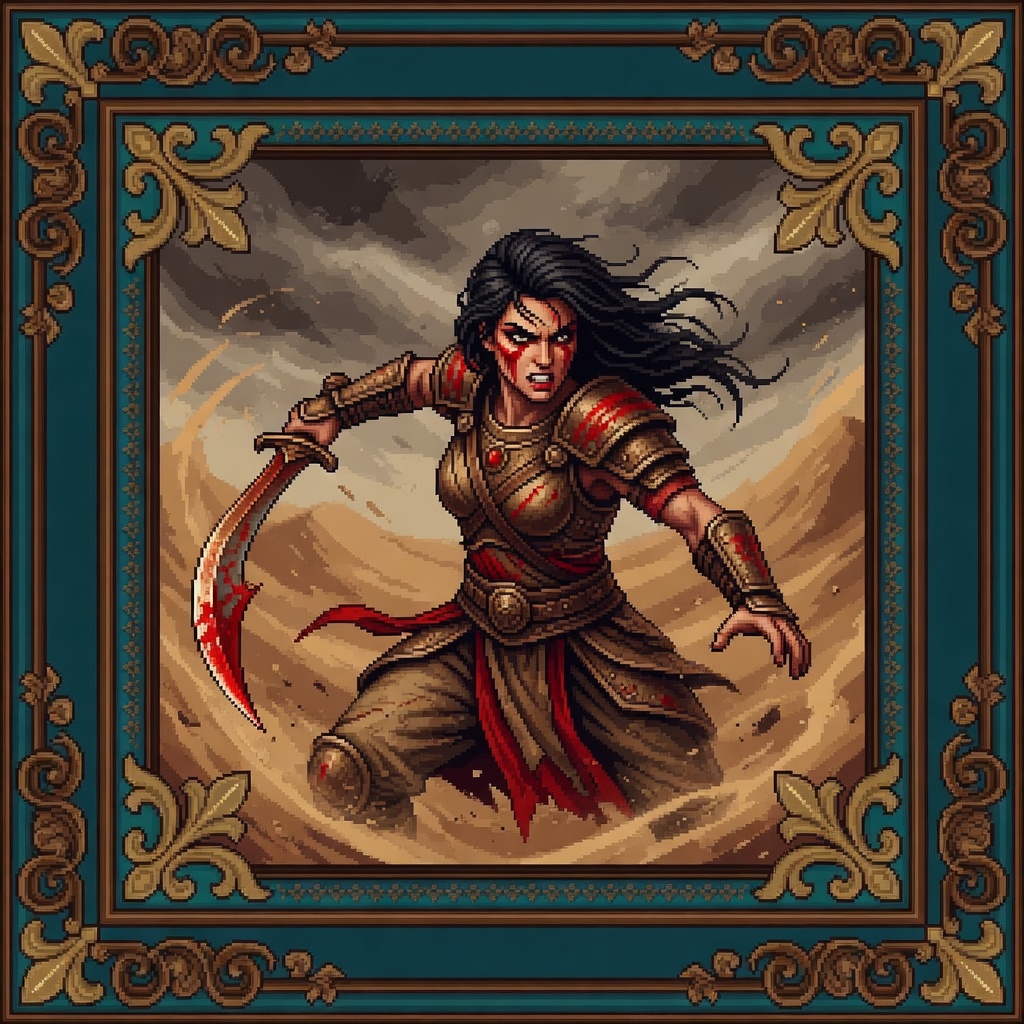 🗡️ Anat
Strong
🗡️ Anat
Strong
Martial goddess, sister/ally of Baal — not El’s consort. Keep distinct from Athirat/Asherah in the atlas.
Baal Cycle; Epic of Aqhat; HB place/personal names
Variants: Anat, ʿnt, btlt ʿnt (maiden Anat)
Attestations & what the sources say
Locus: Baal Cycle; Epic of Aqhat
Role: Warrior ally of Baal
[Archive summary] Anat is a major martial goddess (btlt ʿnt). She presses El for Baal’s palace, fights, mourns and avenges Baal against Mot, and is central in the Epic of Aqhat. Feature-bundle is war/autonomy, not mother-of-pantheon.
Note: Distinct partner-axis from Athirat (Baal vs El).
Locus: Beth-Anath, Anathoth, Shamgar son of Anath
Role: Name survival in places/persons
[Archive summary] The name survives in place and personal names. There is no full Ugaritic-style Anat cycle inside the biblical narrative.
Note: Onomastics only — not a full myth cycle in HB.
Does not claim: Not Athirat under another name.
Related figures
🗡️ Anat-Yahu ⚡ Baal / Hadad 🌊 Athirat
Archive links: §3.1b
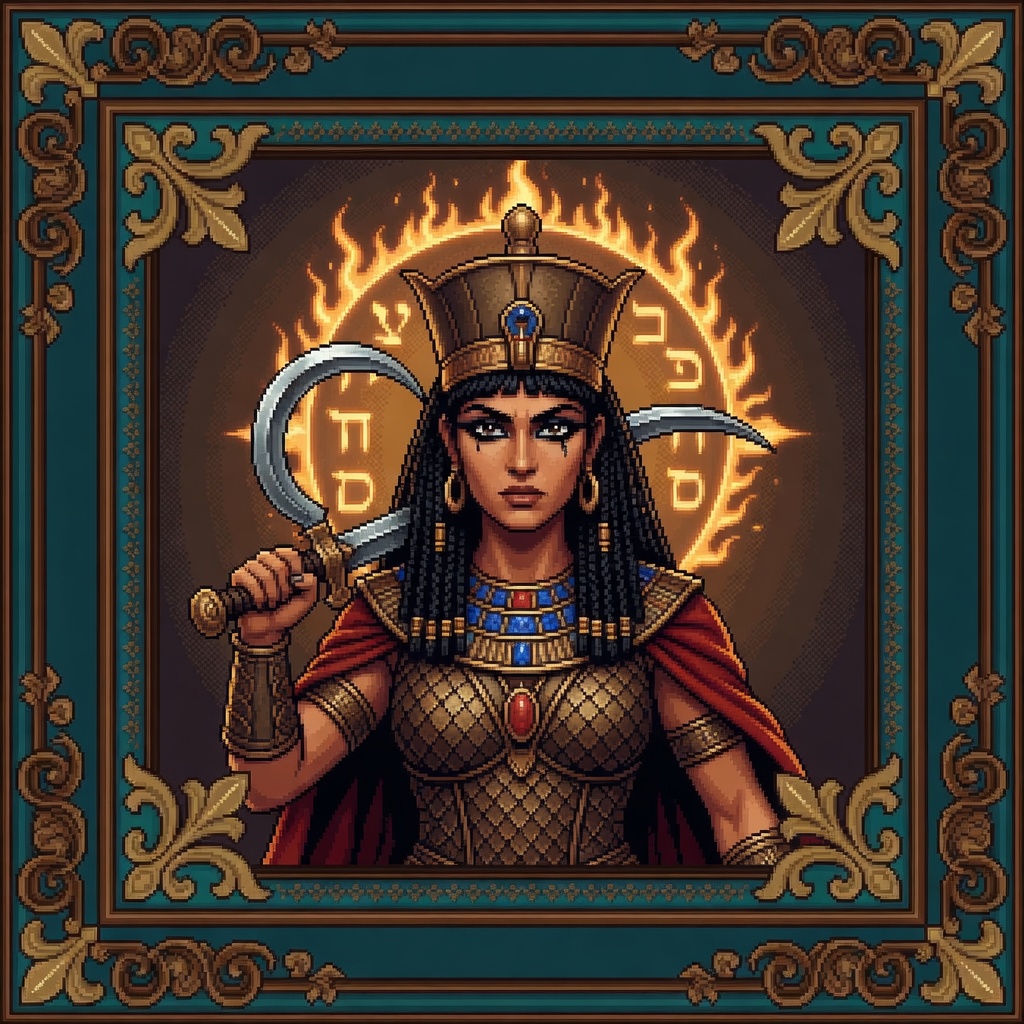 🗡️ Anat-Yahu
Strong
🗡️ Anat-Yahu
Strong
Divine name pairing YHW with Anat in Aramaic papyri from a Jewish military colony in Egypt — Strong attestation; exact relationship Contested.
Elephantine Aramaic papyri (Porten & Yardeni corpus)
Variants: Anat-Yahu, Anat-Bethel, Anat-YHW
Attestations & what the sources say
Locus: 5th c. BCE · Yeb / Elephantine
Role: Anat paired in divine names with YHW
[Archive summary] Jewish colonists maintained a temple to YHW and used forms such as Anat-Yahu in the documentary record. This is primary evidence that some Yahwistic communities still used a divine name pairing involving Anat centuries after the monarchic period. Whether consort, hypostasis, or local syncretic partner remains Contested.
Note: Keep Anat ≠ Asherah method rule.
Does not claim: Does not prove Anat = Asherah.
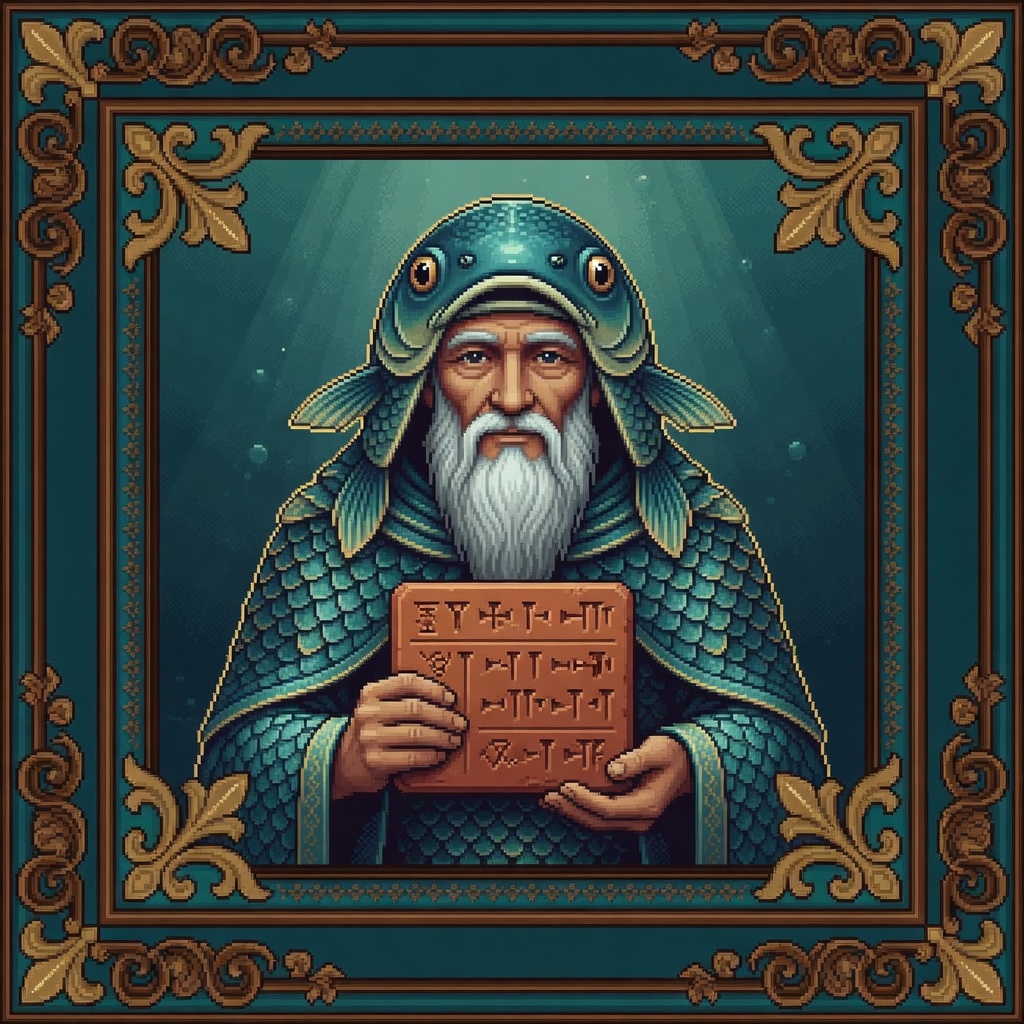 🐟 Apkallu / Abgal
Strong
🐟 Apkallu / Abgal
Strong
Class of sages from the Apsû who teach civilization; often fish-cloak iconography. Parallel culture-bringer motif to Watchers, different moral loading.
Mesopotamian sage lists; iconography; Evidence §5.1
Variants: Apkallu, Abgal, seven sages
Attestations & what the sources say
Locus: Evidence Base §5.1
Role: Culture-bringer sages
[Archive summary] The apkallu are remembered as sages who brought arts of civilization; they belong to Enki’s watery deep (Apsû). Often shown in fish-garbed form. Strong as Mesopotamian tradition. Not the same beings as Enochic Watchers without Contested synthesis.
Note: Class dossier; named individuals can expand later.
Does not claim: Not identical with Watchers.
Related figures
🐟 Enki / Ea
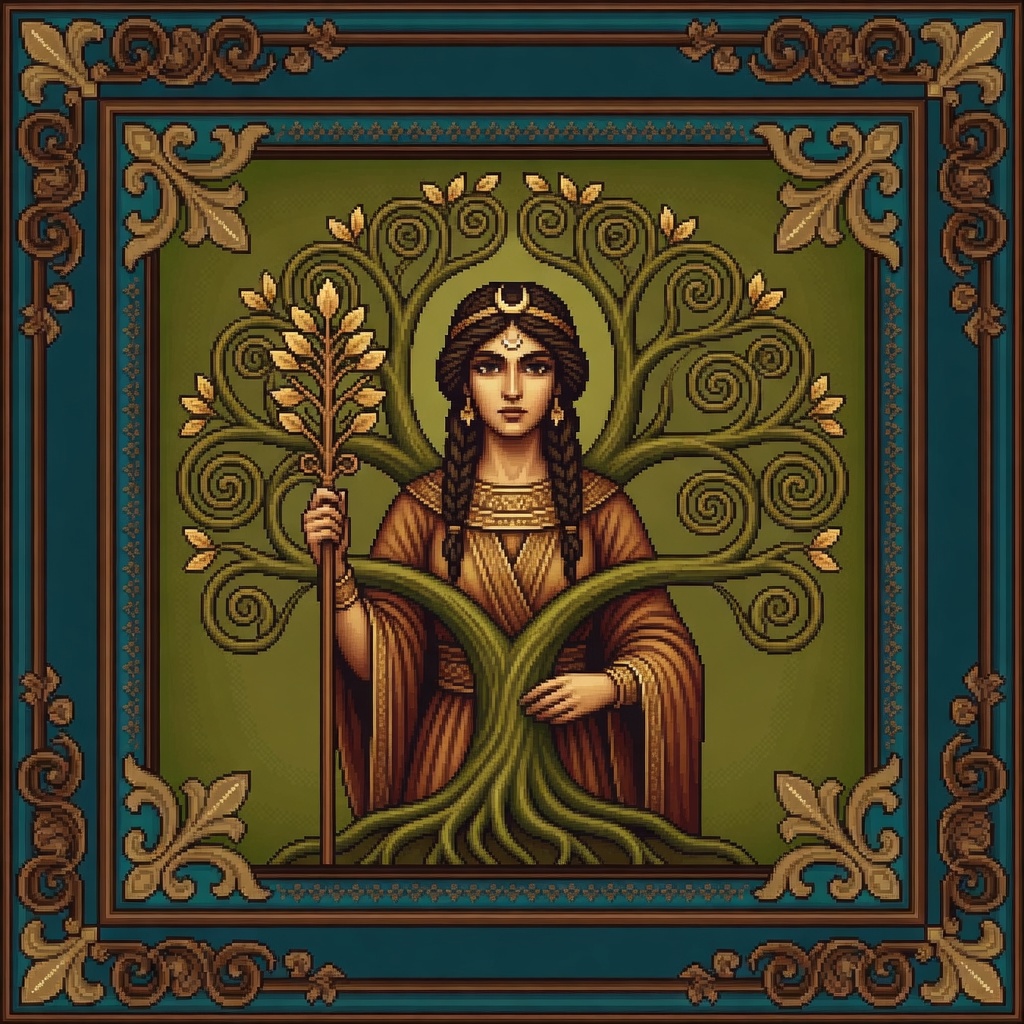 🌊 Asherah
Strong
🌊 Asherah
Strong
Name associated with Yahweh in 8th c. BCE epigraphy; biblical asherim targeted by reform literature. Shares research cluster with Ugaritic Athirat (name/consort pattern) without forcing identity collapse as Strong.
Kuntillet Ajrud; Khirbet el-Qom; Deuteronomistic literature
Variants: Asherah, his Asherah, asherim, ’ăšērâ, ’ăšērîm
Attestations & what the sources say
Locus: Early 8th c. BCE · N. Sinai
Role: “Yahweh of Samaria/Teman and his Asherah”
[Archive summary of primary epigraphy] Inscriptions include blessings by “Yahweh of Samaria and his Asherah” and “Yahweh of Teman and his Asherah.” Association of Yahweh with “his Asherah” is Strong. Whether Asherah is goddess or cult object/symbol remains Contested.
Note: Text stronger than pithos drawings interpretation.
Locus: 8th c. BCE · Judah
Role: Yahweh + “his Asherah” blessing
[Archive summary] Judahite tomb blessing pairs Yahweh with “his Asherah,” corroborating Kuntillet Ajrud from another region.
Locus: 2 Kings 23:4–6
Role: Cult object / asherah removed and burned in Josiah narrative
And the king commanded… to bring forth out of the temple of the LORD all the vessels that were made for Baal, and for the grove, and for all the host of heaven… And he brought out the grove from the house of the LORD… and burned it…
Note: Deuteronomistic literary program; Strong as text.
Locus: Jer 7:17–18; Jer 44
Role: Possible related feminine cult title (identity Contested)
[Archive summary] Household cake offerings to the Queen of Heaven. Cult attestation Strong as text; equation with Asherah Contested (Astarte/Ishtar/hybrid also proposed). See §3.3a.
Locus: Pithos drawings · early 8th c. BCE
Role: Bes-type / tree motifs sometimes read as divine images
[Archive summary] Drawings must not override ink text. See §3.2a — iconography Contested.
Does not claim: Grammar of “his Asherah” (goddess vs object) Contested; Kuntillet drawings Contested; Queen of Heaven identity Contested; single line to Sophia Contested.
Related figures
🌊 Athirat 🔥 Yahweh ✨ Chokhmah / Wisdom ✨ Sophia
 🌊 Athirat
Strong
🌊 Athirat
Strong
Consort of high god El and mother of the gods in Ugaritic myth; Lady of the Sea; primary comparative background for Israelite Asherah.
Baal Cycle; KTU 1.23; KTU/CAT editions
Variants: Athirat, ’aṯrt, Athirat Yam, rbt ʾaṯrt ym (Lady Athirat of the Sea)
Attestations & what the sources say
Locus: Baal Cycle; common epithet rbt ʾaṯrt ym
Role: Lady Athirat of the Sea; El’s consort
[Archive summary of primary profile] Athirat appears as El’s consort and a major mother-goddess. Her most common title is Lady Athirat of the Sea (rbt ʾaṯrt ym). She participates in the Baal Cycle’s palace politics and is mother of a divine group (sons of Athirat).
Note: Primary sources: KTU/CAT; Smith & Pitard on Baal Cycle.
Locus: KTU 1.4 VI 46
Role: Mother of the divine assembly (seventy sons — majority reading)
[Archive summary] After Baal’s palace is built, the banquet text refers to the sons of Athirat. Standard editions and most specialists read seventy sons (šbʿm bn ʾaṯrt). Existence of the group: Strong. Numeral seventy: Strong as majority scholarly text. Alternative seven (astral): Contested.
Note: See Evidence §3.1 expanded discussion.
Locus: KTU 1.23
Role: Maternal role toward Shahar and Shalim / gracious gods
[Archive summary] El meets two women by the sea; Shahar and Shalim are born; nursing language involves Athirat/Rahmay; the gods have extreme appetite. Primary mythic evidence for Athirat’s maternal role toward specific named children.
Does not claim: Does not prove Athirat = every later Sophia myth as one unbroken cult (Contested).
Related figures
🌊 Asherah ⭐ El ⚡ Baal / Hadad 🗡️ Anat 🌊 Shahar 🌊 Shalim
Archive links: §3.1 · §3.1b Anat distinct · Names
 ⚡ Baal / Hadad
Strong
⚡ Baal / Hadad
Strong
Storm–fertility god of the Baal Cycle; Anat’s ally; under El. Later name-history includes Baal-zebub and NT Beelzebul as reception layers — not LBA ontology.
KTU 1.1–1.6 Baal Cycle; 1 Kings 18; 2 Kings 1
Variants: Baal, Hadad, Baʿlu, cloud-rider (epithet tradition)
Attestations & what the sources say
Locus: KTU 1.1–1.6
Role: Storm god; palace; combat with Sea and Death
[Archive summary] Baal/Hadad contends with Yam (Sea), obtains a palace, and is challenged by Mot (Death). Cloud-rider imagery, rain, and kingship are central. Strong as Ugaritic literary religion.
Locus: 1 Kings 18
Role: Illicit rival cult in Israelite narrative
How long halt ye between two opinions? if the LORD be God, follow him: but if Baal, then follow him… And when all the people saw it, they fell on their faces: and they said, The LORD, he is the God.
Note: Polemic layer, not Ugaritic Baal Cycle retelling.
Locus: 2 Kings 1:2–6
Role: Local deity of Ekron consulted by Ahaziah
Go, enquire of Baal-zebub the god of Ekron whether I shall recover of this disease… Is it not because there is not a God in Israel, that ye go to enquire of Baal-zebub the god of Ekron?
Note: Start of name-path toward Beelzebul reception.
Locus: Mark 3:22
Role: Prince of demons in Gospel accusation
And the scribes which came down from Jerusalem said, He hath Beelzebub, and by the prince of the devils casteth he out devils.
Note: Reception history — category error to read this back as LBA Baal’s only meaning.
Does not claim: “Baal was always a demon” as LBA description is a category error.
 ✨ Chokhmah / Wisdom
Strong
✨ Chokhmah / Wisdom
Strong
Personified feminine Wisdom present at creation and calling humanity — Strong as literary figure; continuity with Asherah Contested.
Proverbs 1–9 (esp. 8); Sirach
Variants: Chokhmah, Ḥokhmâh, Wisdom (personified)
Attestations & what the sources say
Locus: Proverbs 8:22–31
Role: Wisdom at creation
The LORD possessed me in the beginning of his way, before his works of old. I was set up from everlasting, from the beginning, or ever the earth was… When he prepared the heavens, I was there… Then I was by him, as one brought up with him: and I was daily his delight… and my delights were with the sons of men.
Note: Literary personification; not a Kuntillet-style inscription.
Does not claim: Unbroken cult line from Athirat Contested.
 ⭐ El
Strong
⭐ El
Strong
High god of the Ugaritic pantheon; patriarchal head; Athirat’s consort. In Israelite tradition El titles and language are absorbed into Yahweh theology.
Ugaritic myth; HB El epithets; comparative Semitic *ʔil-
Variants: El, Ilu, ʾil
Attestations & what the sources say
Locus: Baal Cycle; Ugaritic ritual/myth
Role: High god; Athirat’s consort
[Archive summary] El is the high god of Ugarit, often portrayed as aged/patriarchal, head of the divine assembly, with Athirat as consort. Baal operates under this pantheon structure.
Locus: Psalm 82:1, 6
Role: Elohim in the congregation; children of the Most High
God standeth in the congregation of the mighty; he judgeth among the gods… I have said, Ye are gods; and all of you are children of the most High.
Note: Divine assembly language in HB; exact equation to Athirat’s sons Contested.
Does not claim: Not every HB use of ʾēl is a distinct deity from Yahweh.
Related figures
⭐ Elohim ⭐ El Elyon ⭐ El Shaddai 🔥 Yahweh 🌊 Athirat
 ⭐ El Elyon
Strong
⭐ El Elyon
Strong
“God Most High”; creator of heaven and earth in Genesis 14 Melchizedek context; high-god language shared with broader Canaanite milieu.
Genesis 14; Psalms
Variants: El Elyon, God Most High, ʿelyôn
Attestations & what the sources say
Locus: Genesis 14:18–20
Role: Most high God; possessor of heaven and earth
And Melchizedek king of Salem brought forth bread and wine: and he was the priest of the most high God. And he blessed him, and said, Blessed be Abram of the most high God, possessor of heaven and earth: And blessed be the most high God…
Archive links: §3
 ⭐ El Shaddai
Strong
⭐ El Shaddai
Strong
Epithet of El/Yahweh in patriarchal cycles; mountain/almighty etymologies debated.
Genesis patriarchal cycles; Exodus 6:3; Deir Alla shaddayin (comparative)
Variants: El Shaddai, God Almighty (traditional English), Shaddai
Attestations & what the sources say
Locus: Exodus 6:3
Role: Name history: El Shaddai vs YHWH revelation schema
And I appeared unto Abraham, unto Isaac, and unto Jacob, by the name of God Almighty, but by my name JEHOVAH was I not known to them.
Note: Literary name-history; etymology of Shaddai Contested.
Does not claim: Etymology not settled as Strong.
Archive links: §3
 ⭐ Elohim
Strong
⭐ Elohim
Strong
Plural morphological form used for God, gods, or divine-council contexts depending on syntax and theology of the passage.
Hebrew Bible (e.g. Gen 1; Ps 82)
Variants: Elohim, ʾĕlōhîm
Attestations & what the sources say
Locus: Psalm 82
Role: God judging among gods / divine beings
God standeth in the congregation of the mighty; he judgeth among the gods.
Note: Every plural-as-polytheism reading is Contested case-by-case; form itself is Strong.
Does not claim: Plural form alone does not settle monotheism debates for every verse.
Archive links: §3
 🐟 Enki / Ea
Strong
🐟 Enki / Ea
Strong
God of the freshwater deep (Apsû), wisdom, crafts, and cunning; patron sphere for apkallu sages and civilizing knowledge.
Enki myths; Atrahasis (Ea warns flood hero); apkallu traditions
Variants: Enki, Ea, Nudimmud
Attestations & what the sources say
Locus: Evidence Base §5.1
Role: Lord of the deep; source-sphere of sages
[Archive summary] Enki/Ea is the Mesopotamian god of the Apsû (freshwater deep) and of practical wisdom. Apkallu sages belong to his sphere as culture-bringers. In flood traditions Ea often subverts total destruction by informing the flood hero. Strong as Mesopotamian literary/religious profile.
Note: Pairs with Apkallu class; not merged with Enochic Watchers.
Does not claim: Not the same as Enochic holy/rebel watchers.
Related figures
🐟 Apkallu / Abgal ⚡ Enlil
Archive links: §5.1 · §5.2 Watchers parallel
 ⚡ Enlil
Strong
⚡ Enlil
Strong
Storm/air executive deity; associated with judgment, authority, and flood traditions (e.g. Atrahasis).
Atrahasis; Sumerian hymns; god-lists
Variants: Enlil, Ellil
Attestations & what the sources say
Locus: Atrahasis epic tradition
Role: Executive authority in flood complex
[Archive summary] Enlil appears in Mesopotamian flood traditions as a chief authority whose decision against noisy humanity precipitates the flood, with Ea/Enki mediating survival knowledge to the flood hero. This is Strong as literary tradition, not a single-line identity with biblical Yahweh.
Note: Feature parallel to storm/executive gods elsewhere is comparative; identity collapses are Contested.
Does not claim: Not automatically identical with Baal or Yahweh.
Related figures
🐟 Enki / Ea ⭐ An / Anu ⚡ Baal / Hadad
Archive links: §5.1 Apkallu / Apsû context
 ⚡ Marduk
Strong
⚡ Marduk
Strong
Babylon’s chief god in Enuma Elish; storm/combat and kingship after defeating Tiamat; absorbs high executive functions.
Enuma Elish; Babylonian hymns and rituals
Variants: Marduk, Bēl (title in some contexts)
Attestations & what the sources say
Locus: Enuma Elish
Role: Champion who defeats Tiamat; elevated as king of gods
[Archive summary] In Enuma Elish, Marduk is chosen as champion, defeats Tiamat, organizes cosmos from her body, and is acclaimed with fifty names. This is Strong as Babylonian literary theology of storm-combat and divine kingship.
Note: Feature overlap with Baal’s combat/palace kingship is comparative, not identity.
Does not claim: Not identical with Ugaritic Baal despite storm-combat parallels.
Related figures
⚡ Baal / Hadad ⚡ Enlil
Archive links: §5 comparative motifs
 ⚡ Mot
Strong
⚡ Mot
Strong
Death personified; antagonist who swallows Baal; part of the storm-god’s death/return cycle.
Baal Cycle (KTU 1.4–1.6)
Variants: Mot, Môtu, Death
Attestations & what the sources say
Locus: KTU Mot episodes
Role: Death as cosmic adversary of Baal
[Archive summary] Mot is Death in the Baal Cycle. Baal’s confrontation with Mot is central to seasonal/kingship readings of the myth. Strong as Ugaritic literary figure.
Related figures
⚡ Baal / Hadad ⚡ Yam 🗡️ Anat
Archive links: §3.1c
 ⭐ Proto-Semitic *ʔil-
Strong
⭐ Proto-Semitic *ʔil-
Strong
Reconstructed root “god, deity” upstream of El / Ilu and related Semitic divine vocabulary.
Comparative Semitic linguistics
Variants: *ʔil-, il, el root, Allah (later Arabic — linguistic family only)
Attestations & what the sources say
Locus: Divine Names atlas / Evidence method notes
Role: Root behind high-god vocabulary
[Archive summary] Proto-Semitic *ʔil- is the reconstructed root meaning god/deity, historically upstream of Ugaritic ilu, Hebrew ʾēl/ʾĕlōhîm, and related forms. Strong as linguistics — not itself an excavated cult statue or myth cycle.
Note: Do not treat reconstruction as a personal name with a biography.
Does not claim: Not a personified deity dossier like Baal or Athirat.
Archive links: Names
 🌊 Shahar
Strong
🌊 Shahar
Strong
Dawn deity; paired with Shalim; born in the Birth of the Gracious Gods poem; Venus-morning associations in comparative discussion.
KTU 1.23; Isa 14:12 comparative (Contested identity)
Variants: Shahar, Dawn, Šaḥar
Attestations & what the sources say
Locus: KTU 1.23
Role: Dawn; born after El’s encounter by the sea
[Archive summary] Shahar (Dawn) and Shalim (Dusk/completion) are born in KTU 1.23; nursing language involves Athirat/Rahmay. Strong as Ugaritic literary figures.
Locus: Isaiah 14:12
Role: Hēlēl ben Šāḥar “son of Dawn”
How art thou fallen from heaven, O Lucifer, son of the morning! how art thou cut down to the ground, which didst weaken the nations!
Note: Direct identity with Ugaritic Shahar is Contested (linguistic echo vs myth citation).
Does not claim: Isa 14 = Ugaritic Shahar is Contested.
Related figures
🌊 Shalim 🌊 Athirat
Archive links: §3.1
 🌊 Shalim
Strong
🌊 Shalim
Strong
Dusk / completion deity (root Š-L-M); evening pair of Shahar. Jerusalem-from-Shalim etymology remains Contested.
KTU 1.23
Variants: Shalim, Shalem, Šalim
Attestations & what the sources say
Locus: KTU 1.23
Role: Dusk/completion; twin of Dawn
[Archive summary] Shalim is the evening counterpart of Shahar in the Birth of the Gracious Gods. Strong as Ugaritic text figure. Etymological link of Jerusalem to Shalim is Contested.
Note: Jerusalem etymology Contested.
Does not claim: Jerusalem = city of Shalim not Strong.
Related figures
🌊 Shahar 🌊 Athirat
Archive links: §3.1
 ✨ Sophia
Strong
✨ Sophia
Strong
Wisdom as divine attribute or mythic figure; in some Gnostic systems cosmic drama involving a flawed Demiurge. Texts Strong; single lineage from Asherah Contested.
Wisdom of Solomon; Philo; Nag Hammadi (e.g. Apocryphon of John)
Variants: Sophia, Wisdom (Greek), Hokhmah in Greek dress
Attestations & what the sources say
Locus: Evidence Base §3.5
Role: Developed feminine wisdom figure
[Archive summary] In Wisdom of Solomon and Philo, Wisdom/Sophia is a highly developed feminine divine attribute or intermediary. In various Gnostic systems (e.g. Apocryphon of John), Sophia becomes a central mythological figure whose actions have cosmic consequences, often involving a flawed creator (Demiurge). Well-attested literary developments; direct historical continuity with Asherah remains Contested.
Note: Related token to Chokhmah; not forced identity with Athirat.
Does not claim: Single unbroken goddess passport Contested.
Related figures
✨ Chokhmah / Wisdom 🌊 Asherah
Archive links: §3.5
 🔥 Yahweh
Strong
🔥 Yahweh
Strong
Personal divine name; earliest widely accepted extra-biblical form at Soleb; geographic titles (Teman/Samaria); southern theophany poetry; national god trajectory; associated with Asherah in popular Iron Age epigraphy.
Soleb; Kuntillet Ajrud; el-Qom; HB; Elephantine YHW; Ketef Hinnom
Variants: Yahweh, YHWH, YHW, Yhw, Yahu, YHH (related short forms)
Attestations & what the sources say
Locus: c. 1400 BCE · Amenhotep III
Role: “Shasu of Yhw” — earliest widely accepted extra-biblical name form
[Archive summary] Egyptian topographical list records the land of the Shasu of Yhw. Anchors the divine name in the archaeological record centuries before the monarchic period. Does not describe theology.
Locus: Early 8th c. BCE
Role: Yahweh of Samaria/Teman and his Asherah
[Archive summary] Blessing formulae name Yahweh of Samaria/Teman with “his Asherah.” Association Strong; goddess-vs-object Contested. Geographic titles support southern/multi-locale Yahwism.
Locus: Deut 33:2; Judg 5:4–5; Hab 3:3
Role: Yahweh from Seir/Edom/Teman/Paran language
[Archive summary] Early poems depict Yahweh coming from southern regions. Text Strong; full origin history Contested (see §3.2b). Midianite–Kenite hypothesis remains Contested.
Locus: late 7th–early 6th c. BCE
Role: Priestly blessing; divine name YHWH
[Archive summary] Oldest known Hebrew texts close to Numbers 6:24–26 priestly blessing bearing the divine name YHWH. Strong as examinable artifacts.
Note: See §10.1 examinable list.
Locus: 5th c. BCE
Role: Temple to YHW outside Jerusalem control
[Archive summary] Jewish colony documents a temple dedicated to YHW and a form of Yahwism not strictly monotheistic in the later Deuteronomistic sense.
Does not claim: Does not by itself settle classical philosophical monotheism definitions for every period.
Related figures
🌊 Asherah ⭐ El 🗡️ Anat-Yahu ⚡ Baal / Hadad
 ⚡ Yam
Strong
⚡ Yam
Strong
Sea personified; Baal’s adversary before the palace-building arc.
Baal Cycle opening tablets
Variants: Yam, Yamm, Sea, Nahar (River) pairings
Attestations & what the sources say
Locus: KTU Yam episodes
Role: Sea as rival power
[Archive summary] Yam (Sea) demands supremacy; Baal defeats Yam as part of establishing his kingship before the palace plot. Strong as Ugaritic literary figure.
Related figures
⚡ Baal / Hadad ⚡ Mot 🌊 Athirat
Archive links: §3.1c
Cluster list view uses the same cards as the carousel (A–Z order preserved inside clusters).
Spreadsheets for quick scan — collapsed by default. Full dossiers live in the directory above.
| Name / Form | Culture / Period | Core features | Primary anchors | Conf. |
|---|---|---|---|---|
| An / Anu | Sumerian / Akkadian · 3rd–2nd mill. BCE | Sky, pantheon head, father of gods, divine council | Sumerian literary texts; god-lists; Enuma Elish tradition | Strong (figure) · Contested (direct identity with later ⭐ El) |
| Enlil | Sumerian / Akkadian | Storm/air, executive authority, judgment, flood traditions | Atrahasis; Sumerian hymns; god-lists | Strong |
| Ninhursag / Damgalnuna / Ninmah | Sumerian / Akkadian | Mother goddess, birth, fertility, mountain, creation of humans (with Enki) | Enki and Ninhursag; Atrahasis; temple evidence | Strong (figure) · Contested (line to 🌊 Asherah">🌊 Athirat) |
| Ilu / ⭐ El | Ebla · Ugarit · Canaan · Israel · 3rd–1st mill. BCE | High god, father, creator/judge language, bull imagery, council head | Ebla tablets; Ugaritic myths; Hebrew Bible ⭐ El epithets | Strong |
| 🌊 Asherah">🌊 Athirat / 🌊 Asherah | Ugarit · Israel/Judah · 2nd–1st mill. BCE | Consort of high god, mother of gods, sea-lady, fertility/protection, sacred pole/tree imagery | Ugaritic texts; Kuntillet Ajrud; Khirbet el-Qom; biblical polemics | Strong |
| ⚡ Baal (⚡ Hadad) | Ugarit · Canaan · 2nd–1st mill. BCE | Storm, fertility rain, warrior, cloud-rider, conflict with Sea/Death | ⚡ Baal Cycle (KTU); biblical polemics and theophanic parallels | Strong |
| 🔥 Yahweh (🔥 YHWH / 🔥 Yhw) | Southern Levant / Israel · from ≥14th c. BCE attestation | Personal name; storm/war theophany; national god → sole god trajectory; absorbs ⭐ El titles | Soleb “🔥 Yahweh">🔥 Shasu of 🔥 Yhw”; Kuntillet Ajrud; Hebrew Bible; Elephantine 🔥 YHW | Strong |
| ⭐ El / high-god language">⭐ ⭐ El Shaddai | Hebrew patriarchal tradition | Epithet of ⭐ El/🔥 Yahweh; mountain / almighty readings debated | Genesis (patriarchal cycles); Exodus 6:3; Deir Alla shaddayin | Strong (usage) · Contested (etymology) |
| ⭐ El / high-god language">⭐ ⭐ El Elyon | Canaanite / Israelite | “God Most High”; creator of heaven and earth; Melchizedek context | Genesis 14; Psalms; Ugaritic high-god language | Strong |
| ⭐ El / Elohim">⭐ Elohim | Hebrew | Plural form used for God / gods / divine council contexts | Hebrew Bible (e.g. Ps 82); comparative divine-assembly language | Strong (form) · Contested (every plural reading) |
| 🗡️ Anat (warrior)">🗡️ 🗡️ Anat-🔥 Yahu | Elephantine (5th c. BCE) | Divine name pairing 🔥 YHW with 🗡️ Anat in a Jewish military colony | Elephantine papyri | Strong (attestation) · Contested (exact relationship) |
| ✨ Sophia (trajectory Contested)">✨ Chokhmah / Wisdom | Hebrew wisdom literature | Personified feminine wisdom; present at creation; calls humanity | Proverbs 1–9 (esp. 8); related wisdom books | Strong (texts) · Contested (link to 🌊 Asherah) |
| ✨ Sophia | Hellenistic Jewish · Gnostic | Wisdom as divine attribute or mythic figure; in some systems cosmic drama with Demiurge | Wisdom of Solomon; Philo; Nag Hammadi (e.g. Apocryphon of John) | Strong (texts) · Contested (single lineage from 🌊 Asherah) |
| Proto-Semitic *ʔil- | Reconstructed · upstream of ⭐ El / Ilu / Allah etc. | Linguistic root “god, deity” | Comparative Semitic linguistics | Strong (linguistics) |
Cross-ref: Document 1 §1, §3, §7 · Soleb, Ugarit, Kuntillet Ajrud, Elephantine, DSS.
Primary tablet evidence for 🌊 Asherah">🌊 Athirat as mother of a divine group, with named offspring. Confidence separates what the tablets say from later biblical typology.
KTU 1.4 VI 46 — In the banquet after ⚡ Baal’s palace is built, the text refers to the sons of 🌊 Asherah">🌊 Athirat. Standard editions and most specialists read seventy sons (*šbʿm bn 🌊 Asherah">🌊 ʾaṯrt*), i.e. the full divine assembly invited with ⚡ Baal’s brothers and kinsmen.
| Name | Role | Primary text | Conf. |
|---|---|---|---|
| 🌊 Shahar | Dawn; morning; paired with 🌊 Shalim; Venus-morning associations in comparative discussion | KTU 1.23 | Strong |
| 🌊 Shalim | Dusk / completion (root Š-L-M); evening pair of 🌊 Shahar | KTU 1.23 | Strong |
| Gracious / beautiful gods (*ʾilm nʿmm*) | Voracious divine beings; nurse at the breast of the Lady (🌊 Asherah">🌊 Athirat / Rahmay) | KTU 1.23 | Strong |
| Qudšu-wa-Amrur | Fisherman / messenger of 🌊 Asherah">🌊 Athirat; prepares her mount; accompanies her to ⭐ El | ⚡ Baal Cycle; RS 24.271 | Strong |
| Gupan & Ugar | Messengers of ⚡ Baal (narrative network around 🌊 Asherah">🌊 Athirat’s gifts / palace plot) | ⚡ Baal Cycle | Strong |
⭐ El meets two women by the sea; after a bird-roasting episode they bear 🌊 Shahar and 🌊 Shalim; nursing language involves 🌊 Asherah">🌊 Athirat / Rahmay; the gods have extreme appetite (“lip to earth, lip to sky” type imagery in the poem). This is the main narrative source for 🌊 Asherah">🌊 Athirat’s maternal role toward specific named children.
| Passage | Solid (text / criticism) | Interpretive link to 🌊 Asherah">🌊 Athirat’s sons |
|---|---|---|
| Deut 32:8–9 | DSS/LXX support “sons of God” / “angels of God” vs MT “sons of Israel” — Strong | Equating that group with 🌊 Asherah">🌊 Athirat’s seventy sons — Contested |
| Genesis 10 | Table of Nations; traditional count of seventy — Strong as a reading tradition | Designed parallel to Ugaritic seventy sons — Contested |
| Psalm 82 | Council of ⭐ El; judgment among gods — Strong | Same assembly as 🌊 Asherah">🌊 Athirat’s sons by name — Contested |
| Isaiah 14:12 | Hēlēl ben Šāḥar “son of Dawn” — Strong | Direct identity with Ugaritic 🌊 Shahar — Contested (linguistic echo vs. myth citation) |
Jerusalem-from-🌊 Shalim etymology remains Contested.
Full write-up: Document 1 §3.1 (expanded). Editions: KTU/CAT; Smith & Pitard, ⚡ Baal Cycle II; Smith on KTU 1.23; Wyatt on seventy sons / Deut 32.
Ugarit (Strong): Martial goddess (*btlt ʿnt*), sister/ally of ⚡ Baal — not ⭐ El’s consort. Presses ⭐ El for ⚡ Baal’s palace; fights; avenges ⚡ Baal against Mot; central in Epic of Aqhat. Feature-bundle is war/autonomy, not “mother of the pantheon.”
Bible: Name in places/persons (🗡️ Anat (onomastic)">🗡️ Beth-Anath, 🗡️ Anat (onomastic)">🗡️ Anathoth, Shamgar son of Anath). No full Ugaritic-style cycle in the Hebrew narrative.
Elephantine (Strong attestation): 🗡️ Anat (warrior)">🗡️ 🗡️ Anat-🔥 Yahu (and related forms) in 5th c. BCE Jewish papyri. Relationship to 🔥 YHW (consort / hypostasis / local pairing) remains Contested.
Keep 🗡️ Anat ≠ 🌊 Asherah">🌊 Athirat in the atlas. Doc 1 §3.1b.
| Layer | What ⚡ Baal is here | Conf. |
|---|---|---|
| Ugaritic ⚡ Baal / ⚡ Hadad | Storm–fertility god; palace cycle; fights Yam & Mot; 🗡️ Anat’s ally; pantheon under ⭐ El | Strong |
| Israelite conflict | Polemicized rival cult; 🔥 Yahweh storm imagery sometimes compared to ⚡ Baal’s feature-set | Strong |
| ⚡ Baal name-history / reception">⚡ ⚡ Baal-zebub (Ekron) | Local deity in 2 Kings 1; “lord of the flies” / related title debates | Strong |
| NT ⚡ Baal name-history / reception">⚡ Beelzebul | “Prince of demons” in Gospel accusations against Jesus | Strong (as text) |
| Medieval–modern demonology | ⚡ Baal name-history / reception">⚡ Beelzebub ranked among major demons | Strong (reception history) |
| Pop “⚡ Baal = demon” | Treats Ugaritic ⚡ Baal as if he were always the NT demon | Category error unless labeled as later reception |
Your instinct is partly right for later Abrahamic reception (especially via ⚡ Baal name-history / reception">⚡ ⚡ Baal-zebub → ⚡ Baal name-history / reception">⚡ Beelzebul), and incorrect if applied back onto Late Bronze Ugarit. Same name-history; different ontological slot in each period. Doc 1 §3.1c.
| Item | Domain | Note | Conf. |
|---|---|---|---|
| Pleiades (M45) | Astronomy | Cluster in Taurus; traditional “seven” | Strong |
| Sebettu / Sibittu | Mesopotamia | Divine “Seven”; often astral / Pleiades-linked | Strong (seven gods); Pleiades link often Contested in detail |
| Hebrew *Kīmāh* | Job 9:9; 38:31; Amos 5:8 | Standard ID = Pleiades (LXX Πλειάς) | Strong |
| 🌊 Asherah">🌊 Athirat’s sons = 70 | KTU 1.4 VI 46 | Majority scholarly reading | Strong |
| 🌊 Asherah">🌊 Athirat’s sons = 7 → Pleiades | Minority proposal | Explains interest in Sebettu/Pleiades; does not replace majority text | Contested |
| Feature | 🌊 Asherah">🌊 Athirat | 🗡️ Anat | ⚡ Baal (Ugarit) | 🔥 Yahweh (early + trajectory) |
|---|---|---|---|---|
| Consort of ⭐ El | ● | |||
| Mother of gods / assembly | ● | △ council language | ||
| Sea-lady | ● | △ fights Yam | △ sea imagery later | |
| Storm / rain / war | ● | ● | ● | |
| Martial maiden | ● | |||
| Ally of ⚡ Baal | △ narrative | ● | — | rival in polemic |
| Palace / kingship arc | △ intercedes | ● | ● | royal theology separate |
| Israelite epigraphy pair | 🔥 Yahweh + 🌊 Asherah | 🗡️ Anat (warrior)">🗡️ 🗡️ Anat-🔥 Yahu (Elephantine) | polemicized | — |
| Later “demon” reception | ● via ⚡ Baal name-history / reception">⚡ Beelzebul |
● = characteristic △ = partial or debated
Motif: non-ordinary beings instruct humans in arts, metals, calendrics, or forbidden knowledge; often judged or bound afterward. Parallel structures are Strong; identity across cultures is Contested.
| Figure / group | Culture | Features | Outcome motif | Conf. |
|---|---|---|---|---|
| 🐟 Apkallu / Abgal | Mesopotamia | Pre- / post-flood sages; teach civilization; fish-cloak iconography | Civilizing gift; antediluvian wisdom | Strong |
| 👁 Watchers / Irin (1 Enoch) | Second Temple Jewish | Descend; teach metallurgy, cosmetics, root-cutting, celestial knowledge; take human wives | Violence, corruption; bound until judgment | Strong (texts; DSS) |
| Tuatha Dé Danann | Medieval Irish literature (older oral roots debated) | Skilled otherworld people; crafts, magic, sovereignty | Retreat to mounds / otherworld | Strong (literary) · Contested (historical depth) |
| Quetzalcoatl / related culture-heroes | Mesoamerica | Civilizing teacher; wind/venus associations; moral/cultural instruction | Departure / return expectations in some strands | Strong (figure in sources) · Contested (cross-ocean parallels) |
| Viracocha (and similar Andean high gods / culture-bringers) | Andean traditions | Creator / civilizing walker; moral instruction motifs in recorded traditions | Departure across water in some accounts | Strong (attested traditions) · Contested (comparative identity) |
Cross-ref: Document 1 §5 (culture-bringer motifs).
Rows = figures. Columns = recurring feature bundles. Mark = feature is characteristic in primary or well-established secondary description. This is a pattern-finding tool, not a claim that all marked figures are the same being.
| Figure | Sky / High | Storm / War | Council head | Mother / fertility | Wisdom / teach | Mountain | Sea link | Consort pair | Culture-bringer | Judged / bound |
|---|---|---|---|---|---|---|---|---|---|---|
| An / Anu | ● | ● | ● | |||||||
| Enlil | ● | ● | ||||||||
| Ninhursag | ● | ● | ● | |||||||
| ⭐ El / Ilu | ● | ● | ● | ● | ||||||
| 🌊 Asherah">🌊 Athirat / 🌊 Asherah | ● | ● | ● | |||||||
| ⚡ Baal | ● | ● | ● | ● | ● | |||||
| 🔥 Yahweh | ● | ● | ● | ● | △ | |||||
| ⭐ El / high-god language">⭐ ⭐ El Shaddai | ● | |||||||||
| ✨ Sophia (trajectory Contested)">✨ Chokhmah / ✨ Sophia | ● | △ | △ | |||||||
| 🐟 Apkallu | ● | ● | ● | |||||||
| 👁 Watchers (1 Enoch) | ● | ● | ● | |||||||
| Tuatha Dé Danann | △ | ● | ● | △ | ||||||
| Quetzalcoatl | △ | ● | ● | △ |
● = well-attested characteristic △ = partial, late, or debated association
🔥 Yahweh △ under “Consort pair” reflects Kuntillet Ajrud / el-Qom “his 🌊 Asherah” (association Strong; ontology Contested), not a settled doctrine of a divine wife in later monotheism.
Recurs as An–(Antu/Ki), ⭐ El–🌊 Asherah">🌊 Athirat, and in Israelite popular religion 🔥 Yahweh–🌊 Asherah (epigraphic). Official Judahite/Deuteronomistic religion later suppresses the consort pole. Strong as a structural pattern in the region; meaning of each local pair remains local.
Enlil → Adad/⚡ Hadad → ⚡ Baal features sit in the same functional zone as early 🔥 Yahweh storm-war theophany (e.g. Psalm 29-type language). Specialists often describe attribute absorption and competition, not simple name-swaps. Strong (parallel features) · Contested (single-identity claims).
🌊 Asherah (cult/epigraphy) → personified ✨ Sophia (trajectory Contested)">✨ Chokhmah (Proverbs) → ✨ Sophia (Hellenistic/Gnostic) is a possible literary-theological path discussed in scholarship. Direct cult continuity is Contested; textual personification is Strong.
🐟 Apkallu and 👁 Watchers share “teach specialized arts → world changes → order restored by binding or distance.” Irish and Mesoamerican culture-hero stories share the civilizing-teacher shape at a high level of abstraction. Useful for comparative motif work; not proof of one historical group. Strong (motif recurrence) · Contested (common origin).
Anunnaki / puhru, Ugaritic sons of ⭐ El, and Hebrew ⭐ El / Elohim">⭐ Elohim/council scenes (e.g. Psalm 82, Job 1–2) show a shared ancient Near Eastern assembly concept. Strong.
It does not pick a single name as the only true deity, rank spiritual worth, or collapse all rows into one entity. Those moves are personal discernment, not Evidence Base results.
Ethiopian Orthodox Tewahedo canon ≈ 81 books (46 OT + 35 NT). Geʿez transmission. Larger than Protestant (66) or Catholic (73).
| Work | Ethiopian status | Project fit | Conf. |
|---|---|---|---|
| 1 Enoch | Canonical | 👁 Watchers, DSS, Jude, culture-bringers — only major church with Enoch in the canon | Strong |
| Jubilees | Canonical | Second Temple rewritten Torah; angels; calendar; full form mainly via Ethiopic | Strong |
| 1–3 Meqabyan | Canonical (≠ Greek Maccabees) | Ethiopian narrative identity | Low priority for ANE core |
| NT Sinodos / Didascalia / Clement | In broader NT count | Church order | Low for divine-name / Ugaritic work |
Implication: Ethiopia is a living witness that the Enochic library was treated as scripture in a continuous Christian tradition — parallel to your “multiple textual streams” method (MT / LXX / DSS), not a claim of a single original Bible.
English uses one word; Hebrew uses two.
| Hebrew | Meaning | Referents | Conf. |
|---|---|---|---|
| תֵּבָה tēvāh | Life-preserving vessel / basket through water | Noah’s vessel; Moses’ basket (Exod 2) | Strong |
| אָרוֹן ʾārôn | Chest / box / coffin | Ark of the Covenant; Joseph’s coffin | Strong |
Ark of the Covenant: described cult chest (Exod 25); no authenticated physical specimen in modern archaeology — Strong (textual); Limited (any current possession claim). Axum tradition = living claim, not lab-verified artifact.
Why thin earlier: scope order (ANE names, epigraphy, textual criticism first) — not a verdict against relevance.
| Point | Anchors | Conf. |
|---|---|---|
| Jewish teacher in Galilee/Judea, early 1st c. | Paul; Gospels; context | Strong |
| Execution under Pontius Pilate | Gospels; Tacitus Ann. 15.44; Josephus | Strong |
| James “brother of Jesus called Christ” | Josephus Ant. 20.200; Paul | Strong |
| Testimonium Flavianum wording | Josephus Ant. 18 | Core mention likely; Christian glosses Contested |
| Name form | Yeshua → Greek Iēsous → Jesus | Strong |
Miracles / resurrection / full Christology: theological claims of the sources — not sorted here as laboratory-historical objects the same way Pilate’s execution is.
Sources informing this rebuild: Document 1 §3, §5, §7; Soleb; Ugarit; Kuntillet Ajrud / el-Qom; Elephantine; 1 Enoch / DSS; comparative motif tables in the project archive. Notion divine-names research used only after stripping personal recommendation sections.
Named holy watchers, rebel Watchers, HB messengers, 🐟 Apkallu — confidence = textual presence. Charles 1917 · KJV · §1.6 · §5
 🪽 Uriel
Holy watcher / archangel
Strong
🪽 Uriel
Holy watcher / archangel
Strong
One of the holy angels who watch; set over the world and Tartarus; Enoch’s guide in cosmic and underworld tours; named among the four who hear the cry of the earth (with Michael, Raphael, Gabriel).
Variants: Uriel, Uriel, Ouriel
Method: Confidence = textual presence; parallel ≠ identity.
Uriel, one of the holy angels, who is over the world and over Tartarus.
R.H. Charles 1917. Chapter 20 lists the holy angels who watch.
Source: 1 Enoch 20:2
And then Michael, Uriel, Raphael, and Gabriel looked down from heaven and saw much blood being shed upon the earth, and all lawlessness being wrought upon the earth.
Charles 1917. Four named holy angels as a set.
Source: 1 Enoch 9:1
Uriel repeatedly explains to Enoch the places of luminaries, punishments, and cosmic order (guide role across the heavenly journey sections).
Summary of guide function; full journey is multi-chapter.
Source: 1 Enoch (Book of Watchers; guide role)
 🪽 Raphael
Holy watcher / archangel
Strong
🪽 Raphael
Holy watcher / archangel
Strong
Holy angel set over the spirits of men; commissioned to bind Asael/Azazel in the desert and heal the earth; appears as healing companion in Tobit (separate Second Temple tradition).
Variants: Raphael, Rufael, Rafa’el
Method: Confidence = textual presence; parallel ≠ identity.
Raphael, one of the holy angels, who is over the spirits of men.
Charles 1917.
Source: 1 Enoch 20:3
And again the Lord said to Raphael: ‘Bind Azâzêl hand and foot, and cast him into the darkness: and make an opening in the desert, which is in Dûdâêl, and cast him therein. And place upon him rough and jagged rocks, and cover him with darkness, and let him abide there for ever, and cover his face that he may not see light. And on the day of the great judgement he shall be cast into the fire. And heal the earth which the angels have corrupted, and proclaim the healing of the earth, that they may heal the plague, and that all the children of men may not perish through all the secret things that the Watchers have disclosed and have taught their sons.’
Charles 1917. Binding + healing commission.
Source: 1 Enoch 10:4–8
In Tobit, Raphael accompanies Tobias, defeats the demon Asmodeus, and reveals himself as ‘one of the seven holy angels’ who present the prayers of the saints (Tobit 12:15 tradition).
Separate narrative tradition from 1 Enoch; shared name and healing profile. Not proof of a single unified ‘canon angel’ biography.
Source: Tobit (summary)
 🪽 Raguel
Holy watcher / archangel
Strong
🪽 Raguel
Holy watcher / archangel
Strong
One of the holy angels who watch; takes vengeance on the world of the luminaries — a cosmic-order / astral-discipline function in 1 Enoch 20.
Variants: Raguel, Ragu’el, Rufael (confused in some lists)
Method: Confidence = textual presence; parallel ≠ identity.
Raguel, one of the holy angels who takes vengeance on the world of the luminaries.
Charles 1917.
Source: 1 Enoch 20:4
 🪽 Michael
Holy watcher / archangel
Strong
🪽 Michael
Holy watcher / archangel
Strong
Chief intercessor-warrior in Enochic lists; set over the best part of mankind and chaos; binds Shemihazah’s company; prince who stands for Israel in Daniel; disputes with the devil in Jude; wars with the dragon in Revelation.
Variants: Michael, Mîkâ’êl, Mikha’el
Method: Confidence = textual presence; parallel ≠ identity.
Michael, one of the holy angels, to wit, he that is set over the best part of mankind and over chaos.
Charles 1917.
Source: 1 Enoch 20:5
And the Lord said unto Michael: ‘Go, bind Semjâzâ and his associates who have united themselves with women so as to have defiled themselves with them in all their uncleanness. And when their sons have slain one another, and they have seen the destruction of their beloved ones, bind them fast for seventy generations in the valleys of the earth, till the day of their judgement and of their consummation, till the judgement that is for ever and ever is consummated.’
Charles 1917.
Source: 1 Enoch 10:11–12
But the prince of the kingdom of Persia withstood me one and twenty days: but, lo, Michael, one of the chief princes, came to help me… Michael your prince… And at that time shall Michael stand up, the great prince which standeth for the children of thy people…
KJV. Danielic ‘prince’ language; Second Temple warfare-in-heaven frame.
Source: Daniel 10 / 12 (KJV)
Yet Michael the archangel, when contending with the devil he disputed about the body of Moses, durst not bring against him a railing accusation, but said, The Lord rebuke thee.
KJV. Explicit ‘archangel’ title in NT.
Source: Jude 9 (KJV)
And there was war in heaven: Michael and his angels fought against the dragon; and the dragon fought and his angels, And prevailed not; neither was their place found any more in heaven. And the great dragon was cast out, that old serpent, called the Devil, and Satan, which deceiveth the whole world: he was cast out into the earth, and his angels were cast out with him.
KJV.
Source: Revelation 12:7–9 (KJV)
 🪽 Saraqael
Holy watcher / archangel
Strong
🪽 Saraqael
Holy watcher / archangel
Strong
Holy angel set over the spirits who sin in the spirit — a specialized oversight role in the 1 Enoch 20 list. Name variants overlap with Sariel forms; keep list-context clear.
Variants: Saraqael, Saraqâêl, Sariel (holy list; see also rebel Sariel), Sarakiel
Method: Confidence = textual presence; parallel ≠ identity.
Saraqâêl, one of the holy angels, who is set over the spirits, who sin in the spirit.
Charles 1917. Do not collapse with rebel Sariel without textual argument.
Source: 1 Enoch 20:6
 🪽 Gabriel
Holy watcher / archangel
Strong
🪽 Gabriel
Holy watcher / archangel
Strong
Holy angel over Paradise, serpents, and cherubim in Enoch 20; executes judgment against the giants/bastards in Enoch 10; interprets visions in Daniel; announces births in Luke.
Variants: Gabriel, Gabrî’êl
Method: Confidence = textual presence; parallel ≠ identity.
Gabriel, one of the holy angels, who is over Paradise and the serpents and the Cherubim.
Charles 1917.
Source: 1 Enoch 20:7
And to Gabriel said the Lord: ‘Proceed against the bastards and the reprobates, and against the children of fornication: and destroy [the children of fornication and] the children of the Watchers from amongst men: [and cause them to go forth]: send them one against the other that they may destroy each other in battle: for length of days shall they not have.’
Charles 1917 (brackets as in Charles).
Source: 1 Enoch 10:9–10
Gabriel, make this man to understand the vision… yea, whiles I was speaking in prayer, even the man Gabriel, whom I had seen in the vision at the beginning, being caused to fly swiftly, touched me about the time of the evening oblation.
KJV.
Source: Daniel 8–9 (KJV)
And the angel answering said unto him, I am Gabriel, that stand in the presence of God; and am sent to speak unto thee, and to shew thee these glad tidings… And in the sixth month the angel Gabriel was sent from God unto a city of Galilee, named Nazareth, To a virgin espoused to a man whose name was Joseph, of the house of David; and the virgin’s name was Mary.
KJV. HB/NT messenger role alongside Enochic holy-watcher role.
Source: Luke 1 (KJV)
 🪽 Remiel
Holy watcher / archangel
Strong
🪽 Remiel
Holy watcher / archangel
Strong
Holy angel in the 1 Enoch 20 list, set over those who rise (resurrection / rising ones). Illustrates eschatological specialization among the holy watchers. Distinct from similarly named rebel leaders (e.g. Rameel/Ramiel forms in some 1 En 6 lists) — list-context decides office. Later Jeremiel/Hieremihel traditions are reception.
Variants: Remiel, Râmî’êl, Jeremiel, Hieremihel
Method: Confidence = textual presence; parallel ≠ identity; list-context over name-sound.
Remiel, one of the holy angels, whom God set over those who rise.
Charles 1917. Primary holy-list locus for the resurrection-related office.
Source: 1 Enoch 20:8
[Archive summary] Chapter 20 enumerates holy angels who watch with specialized charges (world/Tartarus, spirits of men, luminaries, etc.). Remiel appears as the entry set over those who rise. Some manuscript traditions vary the count/names of the list; the archive marks Strong for the function where the Charles-type list includes him, and notes variation as Contested for “universal fixed eight.”
Method: function-list densification; MSS variation is Contested for universal list identity.
Source: 1 Enoch 20 (list context)
[Archive method] 1 Enoch also has similarly spelled rebel-leader forms in the chiefs-of-tens catalogues (ch. 6). Do not collapse holy Remiel (ch. 20 office over those who rise) with a rebel “Rameel/Ramiel” chief without a textual argument. Same-sounding names across lists are a Contested identity problem — Strong only for each row’s own locus.
Method control for Pattern 3 / angelology hygiene.
Source: Name-collision method note
[Archive note] Later Jewish and Christian lists sometimes pair Jeremiel/Hieremihel with hope, visions, or the dead. That is reception history (Limited for direct identity with 1 En 20 Remiel). Card keeps Enoch locus Strong and later fusion Contested/Limited.
Reception only — not Second Temple primary for this card’s Strong tier.
Source: Later Jeremiel reception (Limited)
 🪽 Phanuel
Holy watcher / archangel
Strong
🪽 Phanuel
Holy watcher / archangel
Strong
Fourth of the four presences before the Lord of Spirits in 1 Enoch 40 (Book of Parables). Set over repentance and the hope of those who inherit eternal life — a specialized office alongside Michael (mercy), Raphael (wounds/disease), and Gabriel (powers). Teaches how Enoch densifies heaven by function, not only by name-count.
Variants: Phanuel, Fanuel, Penuel (name-root parallel only)
Method: Confidence = textual presence; parallel ≠ identity; Parables unit ≠ automatic Watchers unit.
And on the four sides of the Lord of Spirits I saw four presences, different from those that sleep not, and I learnt their names: for the angel that went with me made known to me their names, and showed me all the hidden things. And I heard the voices of those four presences as they uttered praises before the Lord of glory.
Charles 1917 (Parables). Vision frame for the fourfold set.
Source: 1 Enoch 40:2–4
And he said to me: ‘This first is Michael, the merciful and long-suffering: and the second, who is set over all the diseases and all the wounds of the children of men, is Raphael: and the third, who is set over all the powers, is Gabriel: and the fourth, who is set over the repentance unto hope of those who inherit eternal life, is named Phanuel.’
Charles 1917. Explicit functional assignment — repentance / hope office.
Source: 1 Enoch 40:9
[Archive method] Chapter 40 assigns distinct offices to four named holy angels before the Lord of Spirits. This is Strong evidence that Second Temple literature densifies heaven by specialized roles (mercy, healing, power, repentance), not merely by listing interchangeable messengers. Parallel to 1 En 20 function-list; different literary unit (Parables).
Method attestation for Pattern 5 (heaven densifies).
Source: 1 Enoch 40 (method note)
 👁 Shemihazah
Rebel Watcher (leader)
Strong
👁 Shemihazah
Rebel Watcher (leader)
Strong
Chief of the two hundred Watchers who descend on Mount Hermon; binds the company by oath; associated with enchantments and root-cuttings in the teaching list; bound by Michael’s commission.
Variants: Shemihazah, Semjâzâ, Semjaza, Samyaza, Šemîḥăzāh
Method: Confidence = textual presence; parallel ≠ identity.
And it came to pass when the children of men had multiplied that in those days were born unto them beautiful and comely daughters. And the angels, the children of the heaven, saw and lusted after them, and said to one another: ‘Come, let us choose us wives from among the children of men and beget us children.’ And Semjâzâ, who was their leader, said unto them: ‘I fear ye will not indeed agree to do this deed, and I alone shall have to pay the penalty of a great sin.’ And they all answered him and said: ‘Let us all swear an oath, and all bind ourselves by mutual imprecations not to abandon this plan but to do this thing.’ Then sware they all together and bound themselves by mutual imprecations upon it. And they were in all two hundred; who descended in the days of Jared on the summit of Mount Hermon…
Charles 1917. Core rebel-leader narrative.
Source: 1 Enoch 6
Semjâzâ taught enchantments, and root-cuttings…
Charles 1917 teaching list (partial).
Source: 1 Enoch 8:3
And the Lord said unto Michael: ‘Go, bind Semjâzâ and his associates who have united themselves with women…’
Charles 1917; see Michael card for fuller quote.
Source: 1 Enoch 10:11
 👁 Asael / Azazel
Rebel Watcher (culture-bringer / bound)
Strong
👁 Asael / Azazel
Rebel Watcher (culture-bringer / bound)
Strong
In 1 Enoch, Asael/Azâzêl teaches weapons, metallurgy, and cosmetics; the same name-stream is bound in the desert (Dudael) pending judgment. Leviticus 16 uses ‘Azazel’ in the scapegoat rite. The archive keeps three textual streams clear: Enoch teaching, Enoch binding, Leviticus ritual — identity-collapse across them is Contested. Primary lesson: reception fuses names that method must keep labeled.
Variants: Asael, Asa’el, Âzâzêl, Azazel, Azael
Method: Confidence = textual presence per stream; fusion Contested.
And Azâzêl taught men to make swords, and knives, and shields, and breastplates, and made known to them the metals of the earth and the art of working them, and bracelets, and ornaments, and the use of antimony, and the beautifying of the eyelids, and all kinds of costly stones, and all colouring tinctures. And there arose much godlessness, and they committed fornication, and they were led astray, and became corrupt in all their ways.
Charles 1917. Name form Azâzêl in this teaching passage. Stream (1): culture-bringer who corrupts.
Source: 1 Enoch 8:1–2
Bind Azâzêl hand and foot, and cast him into the darkness: and make an opening in the desert, which is in Dûdâêl, and cast him therein… And on the day of the great judgement he shall be cast into the fire. And heal the earth which the angels have corrupted…
Charles 1917 (abridged; full quote on Raphael card). Stream (2): binding / desert pit / judgment.
Source: 1 Enoch 10:4–8
[Archive method — three streams] 1) 1 Enoch teaching figure (often Asael/Azâzêl in ch. 8): weapons, metals, cosmetics — culture-bringer who corrupts. 2) 1 Enoch binding figure (Azâzêl in ch. 10): desert pit Dudael, judgment, earth-healing commission to Raphael. 3) Leviticus 16 la-‘Azazel: Day of Atonement goat “for Azazel” — ritual destination / figure in priestly law. Strong: each stream exists as text. Contested: that (1)+(2)+(3) are one continuous personal identity. Later reception often fuses them; this archive labels the fusion Contested and keeps the Enochic culture-bringer motif separate from Leviticus ritual identity.
Method attestation for Pattern 3 (name-history) and Pattern 4 (culture-bringers).
Source: Method: Asael vs Azazel vs Leviticus
And Aaron shall cast lots upon the two goats; one lot for the LORD, and the other lot for the scapegoat [Heb. la-‘Azazel]. And Aaron shall bring the goat upon which the LORD’s lot fell, and offer him for a sin offering. But the goat, on which the lot fell to be the scapegoat, shall be presented alive before the LORD, to make an atonement with him, and to let him go for a scapegoat into the wilderness.
KJV with Hebrew name note. Stream (3): Torah ritual. Contested identity with Enochic rebel — Strong for name presence only.
Source: Leviticus 16 (KJV) — name note
 👁 Kokabel
Rebel Watcher (teacher)
Strong
👁 Kokabel
Rebel Watcher (teacher)
Strong
Named among the chiefs of the two hundred (1 En 6:7 list) and as teacher of the constellations in the forbidden-arts catalogue (1 En 8:3).
Variants: Kokabel, Kôkabêl, Kokabiel, Star of God
Method: Confidence = textual presence; parallel ≠ identity.
…Kôkabêl [taught] the constellations…
Charles 1917 teaching list.
Source: 1 Enoch 8:3
And these are the names of their leaders: Samîazâz, their leader, Arâkîba, Râmêêl, Kôkabîêl, Tâmîêl, Râmîêl, Dânêl, Êzêqêêl, Barâqîjâl, Asâêl, Armârôs, Batârêl, Anânêl, Zaqîêl, Samsâpêêl, Satarêl, Tûrêl, Jômjâêl, Sariêl.
Charles 1917 name list (spellings vary by edition).
Source: 1 Enoch 6:7
 👁 Baraqel
Rebel Watcher (teacher)
Strong
👁 Baraqel
Rebel Watcher (teacher)
Strong
Rebel chief named in 1 En 6:7; teaches astrology (Charles: ‘the constellations of the stars’ / astrology arts depending on line assignment) in the 8:3 teaching catalogue — lightning-name associated with sky knowledge.
Variants: Baraqel, Barâqîjâl, Baraqiel, Lightning of God
Method: Confidence = textual presence; parallel ≠ identity.
…Barâqîjâl [taught] astrology…
Charles 1917 teaching list assignment.
Source: 1 Enoch 8:3
…Barâqîjâl… (among the leaders of the two hundred).
See full list under Kokabel card / Charles 6:7.
Source: 1 Enoch 6:7
 👁 Shamsiel
Rebel Watcher (teacher)
Strong
👁 Shamsiel
Rebel Watcher (teacher)
Strong
Rebel chief; teaches the signs of the sun (solar course / sun-lore) in the 1 En 8:3 list.
Variants: Shamsiel, Samsâpêêl, Shamshiel, Sun of God
Method: Confidence = textual presence; parallel ≠ identity.
…Samsâpêêl the signs of the sun…
Charles 1917.
Source: 1 Enoch 8:3
…Samsâpêêl… (among the leaders).
Charles 1917 name list.
Source: 1 Enoch 6:7
 👁 Sariel
Rebel Watcher (chief / teacher)
Strong
👁 Sariel
Rebel Watcher (chief / teacher)
Strong
Appears on the rebel chiefs list (1 En 6:7) and in the teaching catalogue (moon course / related sky-lore depending on line). Distinct in role from holy Saraqael of 1 En 20 unless a text explicitly equates them.
Variants: Sariel, Sariêl, Suriel, Saraqael (do not collapse)
Method: Confidence = textual presence; parallel ≠ identity.
…Sariêl the course of the moon.
Charles 1917 teaching list close.
Source: 1 Enoch 8:3
…Sariêl. (last of the named leaders in Charles’s list of the two hundred’s chiefs).
Keep separate from Saraqael (holy, 1 En 20:6) without explicit identification.
Source: 1 Enoch 6:7
 👁 Armaros
Rebel Watcher (teacher)
Strong
👁 Armaros
Rebel Watcher (teacher)
Strong
Named among the rebel chiefs (1 En 6:7) and as teacher of the resolving of enchantments in 1 En 8:3 — counter-charm / spell-loosing arts in the corruption catalogue.
Variants: Armaros, Armârôs, Armoniel (later variants)
Method: Confidence = textual presence; parallel ≠ identity.
…Armârôs the resolving of enchantments…
Charles 1917.
Source: 1 Enoch 8:3
…Armârôs… (among the leaders of the two hundred).
Charles 1917 name list.
Source: 1 Enoch 6:7
 🔥 Angel of the LORD
HB messenger type
Strong
🔥 Angel of the LORD
HB messenger type
Strong
Hebrew Bible messenger figure who speaks with divine authority, sometimes in first person as YHWH, sometimes distinguished from YHWH. Type-class rather than a single named individual like Michael or Gabriel. Exemplars: bush theophany (Exod 3), Gideon call (Judg 6).
Variants: Angel of the LORD, mal’ak YHWH, Angel of God, Messenger of YHWH
Method: Confidence = textual presence; parallel ≠ identity.
And the angel of the LORD appeared unto him in a flame of fire out of the midst of a bush: and he looked, and, behold, the bush burned with fire, and the bush was not consumed… God called unto him out of the midst of the bush, and said, Moses, Moses… Moreover he said, I am the God of thy father, the God of Abraham, the God of Isaac, and the God of Jacob. And Moses hid his face; for he was afraid to look upon God.
KJV. Oscillation between ‘angel of the LORD’ and ‘God’ speech is the classic type problem.
Source: Exodus 3 (KJV)
And there came an angel of the LORD, and sat under an oak which was in Ophrah… And the angel of the LORD appeared unto him, and said unto him, The LORD is with thee, thou mighty man of valour… And the LORD said unto him, Surely I will be with thee… Then the angel of the LORD put forth the end of the staff that was in his hand, and touched the flesh and the unleavened cakes; and there rose up fire out of the rock, and consumed the flesh and the unleavened cakes. Then the angel of the LORD departed out of his sight. And when Gideon perceived that he was an angel of the LORD, Gideon said, Alas, O Lord GOD! for because I have seen an angel of the LORD face to face.
KJV. Messenger and divine speech interleave.
Source: Judges 6 (KJV)
 🐟 Apkallu (class)
Mesopotamian sage class
Strong
🐟 Apkallu (class)
Mesopotamian sage class
Strong
Mesopotamian antediluvian / culture-bringer sages (often fish-cloaked or hybrid), associated with teaching arts of civilization from the divine realm. Kept as a parallel class to Enochic Watchers — not merged. See Evidence §5.1 for primary controls.
Variants: Apkallu, Abgal, Seven sages, fish-cloaked sages
Method: Confidence = textual presence; parallel ≠ identity.
The Apkallu (or Abgal) are antediluvian sages, often depicted as fish-cloaked or hybrid figures, associated with the transmission of specialized arts and order of civilization from the divine sphere. Primary controls: cuneiform god-lists and sage traditions; Berossus’s later summary of Oannes-type figures.
Class summary for offline panel; full write-up remains in Evidence Base §5.1.
Source: Mesopotamian tradition (archive summary)
Watchers and Apkallu share a high-level ‘teach specialized arts from beyond → world changes’ motif shape; moral loading and literary frames differ. Parallel ≠ identity.
Method control for the whole culture-bringer section.
Source: Comparative method note
Every primary find, corpus, or document cited on the Timeline has a local dossier here. Click a timeline reference or a title to jump to its dossier; each dossier links back to Document 1 write-ups and the timeline card.
Timeline-cited documents & finds (24)
Date: c. 3200 BCE
Kind: Monument / archaeology
Where: Brú na Bóinne, Ireland
Confidence: Strong
What it shows (archive summary)
Neolithic passage tomb with winter-solstice roof-box alignment illuminating the chamber.
What it does not prove
Does not by itself prove a pan-Mediterranean metrological network.
Local deep links
Full write-up: §6.2
Timeline event: open visual card
Period table: Doc 2 · Neolithic
Editions / corpora (not hosted in full here): Published Irish archaeological literature on Brú na Bóinne; modern solstice observations.
Date: c. 1400 BCE (Amenhotep III)
Kind: Epigraphic / royal toponym list
Where: Soleb, Nubia (Egyptian temple of Amenhotep III)
Confidence: Strong
What it shows (archive summary)
Hieroglyphic “land of the 🔥 Yahweh">🔥 Shasu of 🔥 Yhw” — earliest widely accepted extra-biblical 🔥 Yahweh name form. Southern geography: places a group associated with the name in a southern Levant / desert-adjacent horizon (see Evidence §3.2b).
What it does not prove
Does not describe Shasu theology or equate them automatically with later Israelite state religion.
Local deep links
Full write-up: §3.2b, §7.5, §10.1
Timeline event: open visual card
Period table: Doc 2 · Late Bronze · Divine Names atlas
Editions / corpora (not hosted in full here): Standard Egyptological publications of Soleb topographical lists; surveys of the divine name 🔥 Yahweh.
Date: 14th–13th c. BCE
Kind: Clay tablet corpus (cuneiform alphabetic)
Where: Ras Shamra / Ugarit, Syria
Confidence: Strong
What it shows (archive summary)
⭐ El + 🌊 Asherah">🌊 Athirat pantheon, ⚡ Baal Cycle, 🗡️ Anat, divine assembly language — primary comparative background for early Israelite religion.
What it does not prove
Does not prove one-to-one identity of every later biblical name with a single Ugaritic deity.
Local deep links
Full write-up: §3.1, §7.3, §10.2
Timeline event: open visual card
Period table: Doc 2 · Late Bronze
Editions / corpora (not hosted in full here): KTU / CAT editions; major studies of the ⚡ Baal Cycle (e.g. Smith & Pitard).
Date: 14th c. BCE
Kind: Cuneiform scribal practice
Where: Amarna letters and related LBA correspondence
Confidence: Strong
What it shows (archive summary)
Systematic editorial / pronunciation / translation marks used by trained scribes long before Alexandrian sigla.
What it does not prove
Does not prove a single continuous “suppression conspiracy” across millennia.
Local deep links
Full write-up: §1.1
Timeline event: open visual card
Period table: Doc 2 · Late Bronze
Editions / corpora (not hosted in full here): Amarna letter editions; studies of cuneiform glossing practices.
Date: Early 8th c. BCE
Kind: Ink inscriptions on pithoi / plaster
Where: Northern Sinai way-station / religious outpost
Confidence: Strong (text)
What it shows (archive summary)
“🔥 Yahweh">🔥 🔥 Yahweh of Samaria/Teman and his 🌊 Asherah” blessing formulae — primary epigraphy for 🔥 Yahweh–🌊 Asherah association.
What it does not prove
Does not settle whether “his 🌊 Asherah” is goddess or cult object; pithos drawings remain debated. Iconography of Bes-type figures on the same vessels is a separate Contested tier (see Evidence §3.2a).
Local deep links
Full write-up: §3.2, §7.2, §10.1
Timeline event: open visual card
Period table: Doc 2 · Iron Age · Divine Names atlas
Editions / corpora (not hosted in full here): Meshel and subsequent epigraphic publications; secondary discussions of 🌊 Asherah grammar.
Date: 8th c. BCE
Kind: Judahite tomb blessing inscription
Where: Judah (el-Qom)
Confidence: Strong (association)
What it shows (archive summary)
🔥 Yahweh paired with “his 🌊 Asherah” in a blessing — independent regional control on Kuntillet Ajrud.
What it does not prove
Does not alone define official Jerusalem temple theology.
Local deep links
Full write-up: §3.2, §7.2, §10.1
Timeline event: open visual card
Period table: Doc 2 · Iron Age
Editions / corpora (not hosted in full here): Published readings of the el-Qom inscription in epigraphic corpora.
Date: Iron Age II
Kind: Domestic ceramic assemblage
Where: Multiple Judahite sites
Confidence: Strong (existence) / Contested (function)
What it shows (archive summary)
Widespread domestic female figurines; often linked to popular / household devotion involving a goddess figure.
What it does not prove
Exact cultic function remains Contested.
Local deep links
Full write-up: §3.2
Timeline event: open visual card
Period table: Doc 2 · Iron Age
Editions / corpora (not hosted in full here): Archaeological site reports; specialist studies of pillar figurines.
Date: Late 7th c. BCE
Kind: Biblical historiographic narrative
Where: 2 Kings 22–23 (and related Deuteronomistic literature)
Confidence: Strong (as literary program)
What it shows (archive summary)
Program to remove 🌊 asherim, high places, and rival cult objects; centralize worship in Jerusalem.
What it does not prove
Literary presentation is Strong as text; archaeological correlation of every detail varies.
Local deep links
Full write-up: §3.3
Timeline event: open visual card
Period table: Doc 2 · Iron Age
Editions / corpora (not hosted in full here): Hebrew Bible critical editions (MT/LXX apparatus); commentaries on Kings.
Date: Late 7th–6th c. BCE literary horizon
Kind: Biblical prophetic polemic
Where: Judah; Egyptian exile setting in Jer 44
Confidence: Strong (texts) / Contested (identity)
What it shows (archive summary)
Household cake offerings and drink offerings to the Queen of Heaven; whole-family participation (Jer 7); exiles defend the practice (Jer 44). Primary evidence for a feminine-titled cult target of prophetic condemnation.
What it does not prove
Does not settle whether the Queen is 🌊 Asherah, Astarte, Ishtar, or a local hybrid (Contested). Does not by itself prove continuous cult from Ugaritic Athirat.
Local deep links
Full write-up: §3.3a, §3.3
Timeline event: open visual card
Period table: Doc 2 · Iron Age · Asherah character
Editions / corpora (not hosted in full here): Critical editions of Jeremiah (MT/LXX order differences noted in textual criticism); commentaries on Jer 7 and 44.
Date: 9th–8th c. BCE shrine; ostraca archive extends into the early 6th c. horizon
Kind: Fortress temple, standing stone, incense altars, and inscribed pottery
Where: Tel Arad, NE Negev
Confidence: Strong (site and finds) / Contested (referent of “House of YHWH”)
What it shows (archive summary)
The official site record describes a Judean temple with courtyard, temple room, and Holy of Holies, plus two incense altars and a monument. The nearby Elyashiv archive preserves ancient Hebrew ostraca and seals, giving a rare conjunction of architecture and administrative writing.
What it does not prove
A local shrine does not automatically equal the Jerusalem temple, and the function of every installation or the referent of every “House of YHWH” phrase cannot be recovered from the plan alone.
External controls
Israel Nature and Parks Authority · Tel Arad National Park ↗
Israel Antiquities Authority · HA-ESI excavation reports ↗
Local deep links
Full write-up: §7.2, §10.1
Timeline event: open visual card
Period table: Doc 2 · Iron Age
Date: Late 7th–early 6th c. BCE burial horizon
Kind: Iron Age II burial complex and inscribed silver plaques
Where: Ketef Hinnom, Jerusalem
Confidence: Strong (context and object) / wording reconstructed from published readings
What it shows (archive summary)
Israel Museum and IAA records place the caves in the late First Temple horizon. The two silver scrolls preserve an early form of the Priestly Blessing tradition and the divine name YHWH, allowing the archive to connect a holdable object with a text-critical question.
What it does not prove
The amulets do not show that every later biblical book was already fixed in its final form, nor do they settle how a blessing moved between liturgy, burial practice, and protective use.
External controls
The Israel Museum · Silver and gold jewelry / Ketef Hinnom ↗
Israel Antiquities Authority · Ketef Hinnom excavation report ↗
Local deep links
Full write-up: §7.2, §10.1
Timeline event: open visual card
Period table: Doc 2 · Iron Age
Date: 5th c. BCE
Kind: Aramaic papyrus archive
Where: Elephantine / Yeb, Upper Egypt
Confidence: Strong
What it shows (archive summary)
Temple to 🔥 YHW outside Jerusalem control; 🗡️ Anat (warrior)">🗡️ 🗡️ Anat-🔥 Yahu and related forms; petitions to rebuild after destruction.
What it does not prove
Does not prove all diaspora Yahwism matched Elephantine practice.
Local deep links
Full write-up: §7.1, §10.1
Timeline event: open visual card
Period table: Doc 2 · Persian / Hellenistic · Divine Names atlas
Editions / corpora (not hosted in full here): Porten & Yardeni, Textbook of Aramaic Documents from Ancient Egypt; related papyrus editions.
Date: Persian / Hellenistic literary horizon
Kind: Hebrew wisdom literature
Where: Proverbs 1–9 (and related wisdom texts)
Confidence: Strong (texts) / Contested (continuity)
What it shows (archive summary)
Feminine Wisdom at creation, calling humanity — residual poetic form after reform-era goddess polemics.
What it does not prove
Direct unbroken cult line 🌊 Asherah">🌊 Athirat → ✨ Sophia is Contested.
Local deep links
Full write-up: §3.4
Timeline event: open visual card
Period table: Doc 2 · Persian / Hellenistic
Editions / corpora (not hosted in full here): Hebrew Bible critical editions; wisdom literature commentaries.
Date: c. 3rd c. BCE onward
Kind: Greek translation tradition of Hebrew scriptures
Where: Hellenistic Jewish communities (beginning with Torah)
Confidence: Strong
What it shows (archive summary)
Often preserves readings older than later MT; became OT of the early church; includes “sons of God” type readings (e.g. Deut 32:8 tradition).
What it does not prove
Not a single fixed edition from day one — a tradition with stages.
Local deep links
Full write-up: §2.1
Timeline event: open visual card
Period table: Doc 2 · Persian / Hellenistic
Editions / corpora (not hosted in full here): Göttingen / Rahlfs-Hanhart and other critical LXX editions.
Date: Second Temple composition; Geʿez full form; Qumran fragments
Kind: Jewish apocalyptic / Enochic literature
Where: Qumran fragments; full Geʿez corpus; NT quotation (Jude 14–15)
Confidence: Strong (textual content)
What it shows (archive summary)
Named holy/rebel watchers; forbidden arts; binding — culture-bringer motif with moral inversion vs 🐟 Apkallu.
What it does not prove
Not Protestant/Catholic canonical; Ethiopia’s canonicity is reception fact.
Local deep links
Full write-up: §1.5, §1.6, §5.2
Timeline event: open visual card
Period table: Doc 2 · Second Temple
Editions / corpora (not hosted in full here): Critical editions/translations of 1 Enoch; DJD Qumran Enoch fragments.
Date: c. 250 BCE – 70 CE
Kind: Manuscript corpus from Judean Desert
Where: Qumran and related sites
Confidence: Strong
What it shows (archive summary)
Multiple biblical text-types; Enoch; diversity of Second Temple Judaism; critical controls on MT/LXX.
What it does not prove
Does not freeze a single “Qumran orthodoxy” for all Judaism.
Local deep links
Full write-up: §2.1, §7.4, §10.2
Timeline event: open visual card
Period table: Doc 2 · Second Temple
Editions / corpora (not hosted in full here): Discoveries in the Judaean Desert (DJD) series and subsequent publications.
Date: 2nd c. BCE (approx.)
Kind: Bronze geared astronomical device
Where: Antikythera shipwreck, Greece
Confidence: Strong
What it shows (archive summary)
Sophisticated Hellenistic mechanical astronomy — hard physical evidence of advanced engineering.
What it does not prove
Does not require non-human origin claims.
Local deep links
Full write-up: §6.4, §10.4
Timeline event: open visual card
Period table: Doc 2 · Second Temple / Hellenistic tech
Editions / corpora (not hosted in full here): Peer-reviewed technical and archaeological studies of the mechanism fragments.
Date: c. 6–4 BCE (scholarly range)
Kind: Historical chronology synthesis
Where: Matthew/Luke narratives + Herod’s death date controls
Confidence: Strong (relative constraints)
What it shows (archive summary)
If birth is under Herod the Great, it precedes Herod’s death (commonly 4 BCE) — traditional AD 1 is offset.
What it does not prove
Does not erase historicity of execution under Pilate.
Local deep links
Full write-up: §4.1, §11
Timeline event: open visual card
Period table: Doc 2 · Early Roman / NT era
Editions / corpora (not hosted in full here): Josephus; standard critical studies of Herodian chronology.
Date: 4 BCE (conventional critical date)
Kind: Historical chronological control
Where: Josephus + astronomical/eclipse discussions
Confidence: Strong
What it shows (archive summary)
Primary control for dating events framed as “during Herod’s reign.”
What it does not prove
Minor debates over exact month do not remove the pre-4 BCE birth implication for Matthean data.
Local deep links
Full write-up: §4.1
Timeline event: open visual card
Period table: Doc 2 · Early Roman / NT era
Editions / corpora (not hosted in full here): Josephus, Antiquities; modern Herodian chronologies.
Date: 6 CE
Kind: Roman administrative event
Where: Judea under direct Roman rule after Archelaus
Confidence: Strong (census); Contested (harmonizations)
What it shows (archive summary)
Well-attested census under Quirinius — creates ~decade tension with Matthean birth-under-Herod data.
What it does not prove
Does not by itself prove Luke invents Jesus; it flags a chronological discrepancy.
Local deep links
Full write-up: §4.2
Timeline event: open visual card
Period table: Doc 2 · Early Roman / NT era
Editions / corpora (not hosted in full here): Josephus; Roman administrative history; Gospel commentaries on Luke 2.
Date: Enter/stabilize across early centuries of transmission
Kind: Textual criticism dossier
Where: Greek NT manuscript tradition
Confidence: Strong
What it shows (archive summary)
Passages absent from earliest witnesses (e.g. longer ending of Mark; Pericope Adulterae; Comma Johanneum) enter later streams.
What it does not prove
Does not mean “the whole NT is forged”; it maps specific secondary expansions.
Local deep links
Full write-up: §1.2
Timeline event: open visual card
Period table: Doc 2 · Early Roman / NT era
Editions / corpora (not hosted in full here): Nestle-Aland / UBS critical apparatuses; Metzger textual commentary.
Date: 4th c. CE
Kind: Greek uncial Bible manuscripts
Where: Sinaiticus (British Library et al.); Vaticanus (Vatican Library)
Confidence: Strong
What it shows (archive summary)
Among earliest extensive continuous NT (and OT Greek) witnesses; control for later Byzantine expansions.
What it does not prove
Not the only early witnesses — papyri often earlier for individual books.
Local deep links
Full write-up: §2.2, §10.2
Timeline event: open visual card
Period table: Doc 2 · Late Antiquity
Editions / corpora (not hosted in full here): Facsimiles and digital editions of ℵ and B; critical apparatuses.
Date: 6th c. CE calculation
Kind: Calendar / era system
Where: Western Christian computus tradition
Confidence: Strong (offset)
What it shows (archive summary)
AD epoch misaligned by ~4–6 years relative to historical Jesus birth constraints.
What it does not prove
Does not invalidate the AD system for civil dating; it is a calculational offset.
Local deep links
Full write-up: §4.3
Timeline event: open visual card
Period table: Doc 2 · Late Antiquity
Editions / corpora (not hosted in full here): Computus histories; standard chronographic handbooks.
Date: Medieval Masoretic codices (Aleppo, Leningrad, etc.)
Kind: Hebrew biblical text tradition + apparatus
Where: Masoretic scribal schools
Confidence: Strong
What it shows (archive summary)
Extremely dense control apparatus (masora, qere/ketiv); stabilized Hebrew text form.
What it does not prove
Not the only ancient Hebrew text-type — DSS/LXX preserve alternatives.
Local deep links
Full write-up: §1.1, §2.1
Timeline event: open visual card
Period table: Doc 2 · Late Antiquity / medieval reception
Editions / corpora (not hosted in full here): BHS / BHQ; facsimiles of Leningrad and Aleppo codices.
Date: 1516 CE onward (printed Greek NT tradition)
Kind: Printed Greek New Testament base
Where: Early modern Europe
Confidence: Strong (as historical print tradition)
What it shows (archive summary)
Late Byzantine-leaning base that inherits several secondary readings later moved to apparatus in critical editions.
What it does not prove
Not identical with “the original autographs.”
Local deep links
Full write-up: §1.3
Timeline event: open visual card
Period table: Doc 2 · Early Modern
Editions / corpora (not hosted in full here): Early Erasmus editions; later TR printings; comparison with NA28.
Date: 1582 CE
Kind: Calendar reform
Where: Catholic Europe, later global civil adoption
Confidence: Strong
What it shows (archive summary)
Correction of Julian drift; relevant to long-range chronological bookkeeping.
What it does not prove
Does not by itself rewrite ancient absolute dates without conversion care.
Local deep links
Full write-up: §4.4
Timeline event: open visual card
Period table: Doc 2 · Early Modern
Editions / corpora (not hosted in full here): Papal bull Inter gravissimas; standard calendar history references.
Date: 1611 CE
Kind: English Bible translation
Where: England (Authorized Version tradition)
Confidence: Strong (as translation history)
What it shows (archive summary)
Influential English text based largely on TR/Byzantine stream — inherits several secondary NT readings.
What it does not prove
Not a primary Greek/Hebrew witness.
Local deep links
Full write-up: §1.3
Timeline event: open visual card
Period table: Doc 2 · Early Modern
Editions / corpora (not hosted in full here): 1611 and later KJV printings; comparison with modern critical translations.
This is a living, evidence-first research archive. The Intro tab is the structured front door; this page holds maintenance notes, panel inventory, and the commitment that keeps Documents 1–2 clean.
| Panel | Contents | Evidence status |
|---|---|---|
| Intro | Orientation, document map, confidence key, method rules, quick links | Guide only |
| Evidence Base | Primary record in expandable sections (textual criticism through examinable artifacts) | Primary evidence bar |
| Timeline | Interactive visual chronology + Document 2 period notes | Same bar as Doc 1 |
| Patterns | Seven side-by-side patterns from Document 1 §0 | Descriptive synthesis of evidence |
| Divine Names | Catalogue + offline character pages with attestations and source quotes | Historical / linguistic labels |
| Angels | Offline Phase 1 named holy/rebel watchers, HB messenger type, Apkallu class — embedded quotes | Textual presence (Strong) · identity leaps Contested |
| Sources | Local dossiers for every primary find/document cited on the Timeline | Archive summaries + links into Doc 1 |
Archive maintained as living research. All future additions to Documents 1–3 (evidence surfaces) must meet the same evidentiary standard. The former Framework Layer is retired.